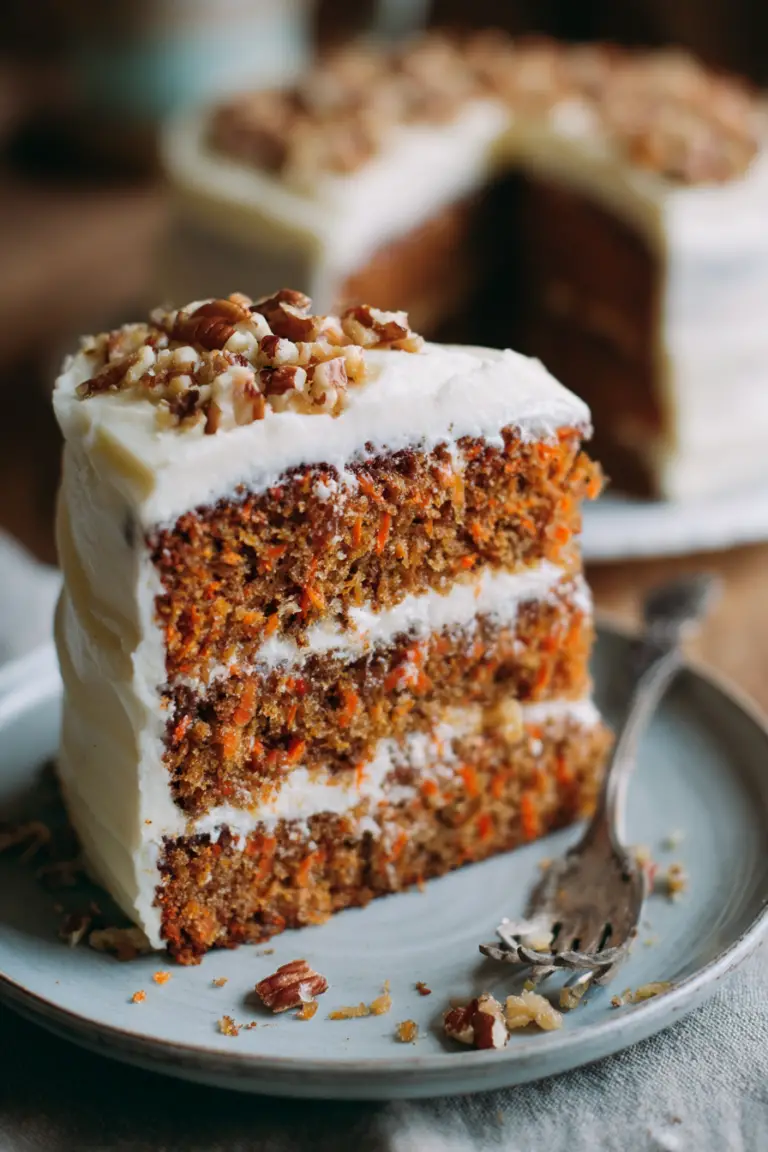
Best Carrot Cake Recipe Ever
My first adventure with making a carrot cake was, well, an adventure. I was maybe 20, fresh out of college, and desperate to impress my then-boyfriend’s family at their Easter gathering. I’d always loved carrot cake, but had never actually baked one from scratch. I found a recipe online that claimed to be the “Best Carrot Cake Recipe Ever,” and foolishly thought, “How hard can it be?” Turns out, pretty hard when you’re multitasking trying to watch a new episode of your favorite show and bake at the same time. I remember distinctly pulling the cakes out of the oven, only to realize I’d completely forgotten to add the cinnamon and nutmeg. It was a pale, sad-looking cake, tasting mostly of sweet, spiced nothingness. Thank goodness for the cream cheese frosting, which honestly saved the day, but that cake was definitely *not* the best. Lesson learned: focus! After many more tries, some definitely better than that first one, I finally perfected my version of the Best Carrot Cake Recipe Ever, and it’s become a true family favorite.
Recipe Card
| Recipe Title | Best Carrot Cake Recipe Ever |
|---|---|
| Servings | 12-16 generous slices |
| Prep Time | 40 minutes |
| Cooking Time | 30-35 minutes |
| Calories | Approx. 450 per slice (before frosting) |
Ingredients
- 2 cups all-purpose flour
- 2 teaspoons baking soda
- 1/2 teaspoon salt
- 1 teaspoon ground cinnamon
- 1/2 teaspoon ground nutmeg
- 1/4 teaspoon ground cloves (optional, but I love it)
- 1 1/2 cups granulated sugar
- 1/2 cup packed light brown sugar
- 1 cup vegetable oil (or other neutral oil like canola or grapeseed)
- 4 large eggs
- 1 teaspoon vanilla extract
- 3 cups finely grated carrots (about 4-5 medium carrots)
- 1 (8-ounce) can crushed pineapple, well drained
- 1 cup chopped pecans or walnuts (optional, but highly recommended)
Okay, so let’s talk about these ingredients for a sec, because even simple stuff can go wrong. The flour, baking soda, and salt are pretty straightforward, but don’t just dump ’em in. Sift them together! I once skipped sifting because I was in a hurry, and ended up with little pockets of unmixed baking soda in my cake. Gross, right?
Spices are where the flavor magic happens. That first disaster cake where I forgot the cinnamon and nutmeg? Yeah, never again. The optional cloves really give it a depth that makes people say, “What *is* that amazing flavor?” Don’t skimp on these; they’re the heart of the cake.
For the sugars, I like the mix of granulated and brown. The brown sugar adds a little more moisture and a lovely molasses note. I once only had granulated sugar, and the cake was still good, but it lacked that extra something, you know?
Vegetable oil is key for moisture. Don’t try to swap it for melted butter thinking it’ll be richer. I did that once, thinking “butter is always better!” but the cake came out denser and heavier, not in a good way. Carrot cake gets its texture from the oil, not butter, trust me on this one.
Eggs need to be large, and room temperature. I know, I know, who remembers to take eggs out of the fridge an hour early? But it really helps them emulsify better with the oil and sugar, creating a smoother batter. I’ve used cold eggs in a pinch, and the batter just looks a little chunkier. Not the end of the world, but room temp is better.
Vanilla extract? Use the good stuff if you can. It makes a difference. And carrots! Three cups sounds like a lot, but they cook down. Make sure they’re finely grated. I tried using thicker shreds from a food processor once, and the cake had these weird, stringy bits of carrot. Not exactly appealing. Take the extra minute to grate them finely.
Crushed pineapple adds moisture and a subtle tang. The key here is “well drained.” I mean *really* well drained. Like, press it against the side of the can with a spoon to get out as much liquid as possible. One time, I just gave it a quick drain, and my cake was a little too soggy in the middle. Live and learn, right?
And nuts? Totally optional, but I think pecans or walnuts add a fantastic crunch and earthy flavor. If you’re not a nut person, skip ’em. If you are, toast them lightly beforehand for even more flavor. I always forget this step, but when I remember, wow, what a difference!
Directions
- Preheat your oven to 350°F (175°C). Grease and flour two 9-inch round cake pans. Or, if you’re making a sheet cake, a 9×13 inch pan works great.
- In a large bowl, whisk together the flour, baking soda, salt, cinnamon, nutmeg, and cloves (if using). Set aside.
- In another large bowl, whisk together the granulated sugar, brown sugar, and vegetable oil until combined.
- Beat in the eggs one at a time, mixing well after each addition. Stir in the vanilla extract.
- Gradually add the dry ingredients to the wet ingredients, mixing on low speed or by hand until just combined. Don’t overmix!
- Fold in the grated carrots, drained pineapple, and chopped nuts (if using).
- Divide the batter evenly between the prepared cake pans.
- Bake for 30-35 minutes, or until a wooden skewer inserted into the center comes out clean.
- Let the cakes cool in the pans for about 10-15 minutes before inverting them onto a wire rack to cool completely.
Alright, let’s get real about some of these steps, because I’ve messed up almost every single one at some point. That first step, preheating the oven and greasing pans? Crucial. I once tried to bake something in a cold oven because I was impatient, and it took forever to bake and was unevenly cooked. And not greasing the pans enough? Oh boy, nothing worse than a beautiful cake stuck to the bottom of the pan. I’ve had to gently pry cakes out, leaving half of them behind. Now, I grease, flour, AND often line with parchment paper for good measure. Call me paranoid, but I like my cakes in one piece!
Mixing the dry and wet ingredients separately, then combining them carefully, is really important. I used to just throw everything in one bowl because I hated doing extra dishes. But I learned the hard way that you need to thoroughly combine your dry ingredients so the leavening agents are distributed evenly. Otherwise, you get lumps or an uneven rise. And the “don’t overmix” bit for step 5? Seriously, listen to it! Overmixing develops the gluten in the flour too much, making your cake tough and chewy instead of light and tender. I’ve made cakes so tough you could bounce them, and it’s usually because I got carried away with the mixer.
Baking time is always a bit of a dance. My oven runs a little hot, so I usually start checking around 28 minutes. Sticking a wooden skewer or toothpick in is the best way to tell. If it comes out with wet batter, it needs more time. If it comes out with moist crumbs, it’s done. If it comes out totally dry, it’s probably overbaked. I once pulled a cake too early, and the middle completely collapsed when it cooled, leaving a big crater. That was a fun one to try and frost!
Cooling the cakes properly is also super important. That 10-15 minutes in the pan helps the cake firm up so it doesn’t break when you flip it. But don’t leave it in there too long, or it can start to steam and get soggy. And then, once it’s out, it needs to cool COMPLETELY on a wire rack before you even *think* about frosting it. Trust me, I’ve been impatient and frosted a slightly warm cake. The frosting just melted and slid right off the sides, making a huge sticky mess. It looked like a sad, deflated swamp monster, but it still tasted good thanks to all those spices!
This recipe is just fantastic. It’s got everything you want in a carrot cake: moist, flavorful, not too dense, not too crumbly. It’s become my go-to for pretty much any occasion, from birthday parties to just a regular Sunday dessert. I love that it makes a big batch, so there are always leftovers, which makes it a great family favorite. It freezes really well too, which is super helpful for meal prep if you wanna bake ahead. Just wrap the unfrosted layers tightly and freeze for up to a month. I’ve definitely learned over the years that while baking can be precise, it’s also about feeling things out and learning from your mistakes. It’s truly a comfort food for me, and the smell of it baking fills the whole house with happiness. I wouldn’t change a thing about this core recipe, it’s just perfect as is.
Nutrition Info (per serving)
| Calories | Carbs | Fat | Protein |
|---|---|---|---|
| 450 | 60g | 20g | 5g |
Okay, looking at these numbers, it’s no surprise carrot cake isn’t exactly a health food, especially before the frosting! Those calories come from the sugar and oil, which are essential for flavor and moisture in a cake. Does it surprise me? Not really, it’s a dessert after all. I haven’t really tried to make it “lighter” because frankly, if I’m having carrot cake, I’m going all in. But if you wanted to, you could probably reduce the sugar by maybe 1/4 cup without too much fuss. For special diets, this isn’t naturally gluten-free or dairy-free (unless you skip the frosting), but there are good gluten-free flour blends out there if you need to adapt it. I haven’t personally tried a lot of those swaps, because my family doesn’t have those restrictions, but I’ve heard good things about almond flour versions for a slightly different texture.
Ingredient Swaps
| Ingredient | Substitution |
|---|---|
| Vegetable Oil | Applesauce (half the amount of oil) |
| Granulated Sugar | Maple Syrup or Honey (reduce liquid elsewhere) |
| All-Purpose Flour | Whole Wheat Pastry Flour (for a denser texture) |
| Pecans/Walnuts | Raisins, shredded coconut, or omit entirely |
So, about these swaps. I’ve definitely tried a few because sometimes you just don’t have what you need or you’re feeling adventurous. Swapping half the vegetable oil for applesauce actually works pretty well for cutting down on fat, and the cake stays surprisingly moist. It does give a slightly different texture, a little less rich, but it’s a decent swap if you’re looking for a healthier option. The sugar swaps are trickier. I once tried to use all maple syrup, and it threw off the liquid balance completely, making the cake gummy. So, if you do use liquid sweeteners, you’d need to reduce the pineapple liquid or even the oil a tiny bit. I haven’t quite perfected that one yet!
Whole wheat pastry flour can work, but don’t expect the same light, fluffy texture. It’ll be denser and have a more rustic, wholesome flavor. I used it once thinking it’d be a “healthier” cake, but my family just looked at it funny. It was still good, but not *the best*. And as for the nuts, definitely play around with adding raisins or shredded coconut if you like those flavors. I actually love adding golden raisins sometimes, they get all plump and juicy in the cake. Just don’t add too many, or it can get a bit overwhelming. Omitting nuts is totally fine; the cake is still fantastic without them.
Tips
- **Grate Carrots Finely:** Use the small holes on your box grater or a food processor with a fine grating disc. Large shreds make for a chunky texture.
- **Don’t Overmix the Batter:** Mix until *just* combined after adding dry ingredients. Overmixing develops gluten, leading to a tough cake.
- **Drain Pineapple THOROUGHLY:** Press out as much liquid as possible from the crushed pineapple to prevent a soggy cake.
- **Cool Cakes Completely:** Absolutely no frosting on warm cakes! It will melt and slide right off. Be patient, it’s worth it.
- **Room Temperature Ingredients for Frosting:** For the best, smoothest cream cheese frosting, make sure your cream cheese and butter are softened to room temperature.
Okay, these tips are born from real, painful mistakes. That “grate carrots finely” one? My first cake, before I even added the spices, I grated the carrots on the big holes of my box grater. My cake ended up with these long, orange strings that were just weird. It didn’t melt into the cake like finely grated carrots do, and the texture was really off-putting. I learned that day that patience with a grater pays off big time.
And the “don’t overmix” tip? I’ve been there, thinking “a little more mixing can’t hurt.” Oh, it absolutely can. One time, I was trying to get *every single lump* out of the batter, and I just kept mixing and mixing with the electric mixer. The cake came out so dense and rubbery, you could practically use it as a frisbee. It tasted fine, but the texture was a real bummer. Now, I mix just until the flour streaks disappear, and I stop. Lumps are okay! They usually bake out.
The “cool cakes completely” is probably the tip I wish I knew earlier. That first disaster Easter cake, after I realized I forgot the spices, I was so determined to make it perfect with the frosting. It was still a little warm from the oven, but I was so impatient. I slathered that cream cheese frosting on, and it just started to melt and pool around the base of the cake. It looked like a swampy mess. The frosting was sliding everywhere, and it was impossible to get a smooth coat. It was embarrassing, but a good lesson: good things come to those who wait, especially when it comes to frosting a cake.
FAQ
Q: My cake always comes out dry. What am I doing wrong?
A: Oh, I’ve been there! A dry cake usually comes down to a few things. First, check your oven temperature—it might be running hot, causing it to overbake. Get an oven thermometer! Second, make sure you’re measuring your flour correctly; too much flour will absorb all the moisture. Spoon it into your measuring cup, then level it off. Lastly, you might be overbaking it. Start checking for doneness a few minutes earlier than the recipe suggests, and look for moist crumbs on the skewer, not a totally dry one.
Q: Can I make this cake ahead of time? How do I store it?
A: Absolutely! This cake is actually fantastic made a day or two in advance; the flavors really meld together. You can bake the cake layers, let them cool completely, then wrap them tightly in plastic wrap and store them at room temperature for a day, or freeze them for up to a month. Make the frosting the day you want to serve. Once frosted, store the whole cake covered in the fridge. It’s best served at room temperature, so take it out about an hour before you plan to eat it.
Q: My cream cheese frosting is too runny/too stiff. Any tips?
A: Yes! Frosting consistency is a common issue. If it’s too runny, it’s usually because your butter and/or cream cheese weren’t cold enough, or you added too much liquid (milk/cream). Try chilling it in the fridge for 20-30 minutes, then re-whipping. If it’s too stiff, you probably added too much powdered sugar, or your butter/cream cheese were too cold. Add milk or heavy cream, one teaspoon at a time, until you reach your desired consistency. Remember, room temperature ingredients are key for that perfectly smooth frosting!
Q: What’s the best way to grate carrots?
A: I’ve used all sorts of methods! For the best texture, I honestly prefer using the small holes on a good old-fashioned box grater. It gives you those fine, delicate shreds that just melt into the cake. If you’re short on time or making a huge batch, a food processor with a fine grating disc works wonders too. Just make sure it’s the *fine* disc, not the shredding disc, otherwise, you’ll end up with those stringy bits I mentioned earlier that don’t make for a pleasant bite.
That’s everything I know about making Best Carrot Cake Recipe Ever! Hope you give it a try. And if you mess it up, you’re in good company—I still do it sometimes.
Best Carrot Cake Recipe Ever
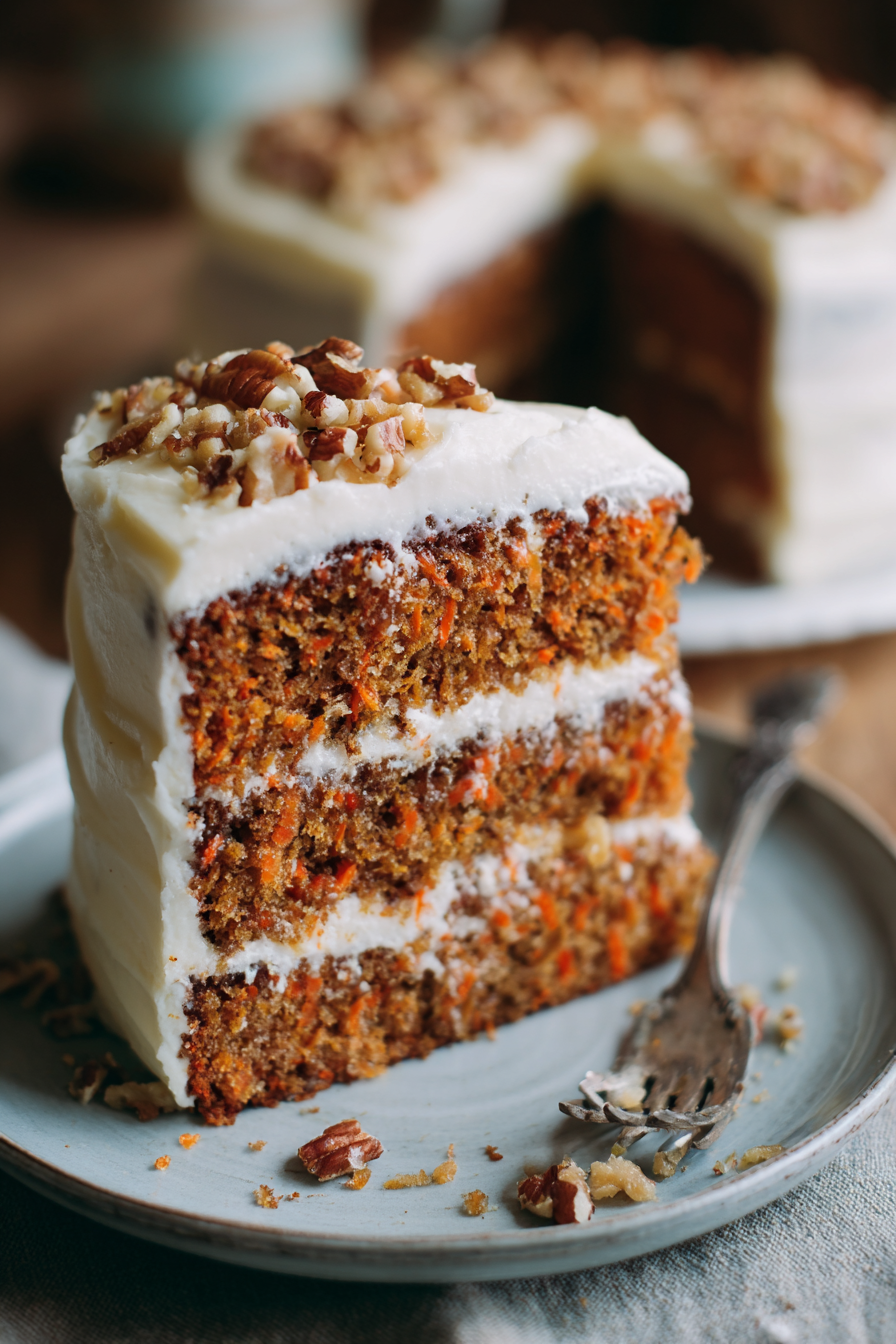
Discover the ultimate, perfectly moist and flavorful carrot cake recipe, honed through years of baking triumphs and humorous mishaps. This beloved family favorite features a perfect balance of warming spices, tender carrots, and a hint of pineapple, promising a truly unforgettable dessert experience.
Ingredients
- 2 cups all-purpose flour
- 2 teaspoons baking soda
- 1/2 teaspoon salt
- 1 teaspoon ground cinnamon
- 1/2 teaspoon ground nutmeg
- 1/4 teaspoon ground cloves (optional, but I love it)
- 1 1/2 cups granulated sugar
- 1/2 cup packed light brown sugar
- 1 cup vegetable oil (or other neutral oil like canola or grapeseed)
- 4 large eggs
- 1 teaspoon vanilla extract
- 3 cups finely grated carrots (about 4-5 medium carrots)
- 1 (8-ounce) can crushed pineapple, well drained
- 1 cup chopped pecans or walnuts (optional, but highly recommended)
Instructions
-
Preheat your oven to 350°F (175°C). Grease and flour two 9-inch round cake pans. Or, if you’re making a sheet cake, a 9×13 inch pan works great.
-
In a large bowl, whisk together the flour, baking soda, salt, cinnamon, nutmeg, and cloves (if using). Set aside.
-
In another large bowl, whisk together the granulated sugar, brown sugar, and vegetable oil until combined.
-
Beat in the eggs one at a time, mixing well after each addition. Stir in the vanilla extract.
-
Gradually add the dry ingredients to the wet ingredients, mixing on low speed or by hand until just combined. Don’t overmix!
-
Fold in the grated carrots, drained pineapple, and chopped nuts (if using).
-
Divide the batter evenly between the prepared cake pans.
-
Bake for 30-35 minutes, or until a wooden skewer inserted into the center comes out clean.
-
Let the cakes cool in the pans for about 10-15 minutes before inverting them onto a wire rack to cool completely.
Nutrition (Per Serving)