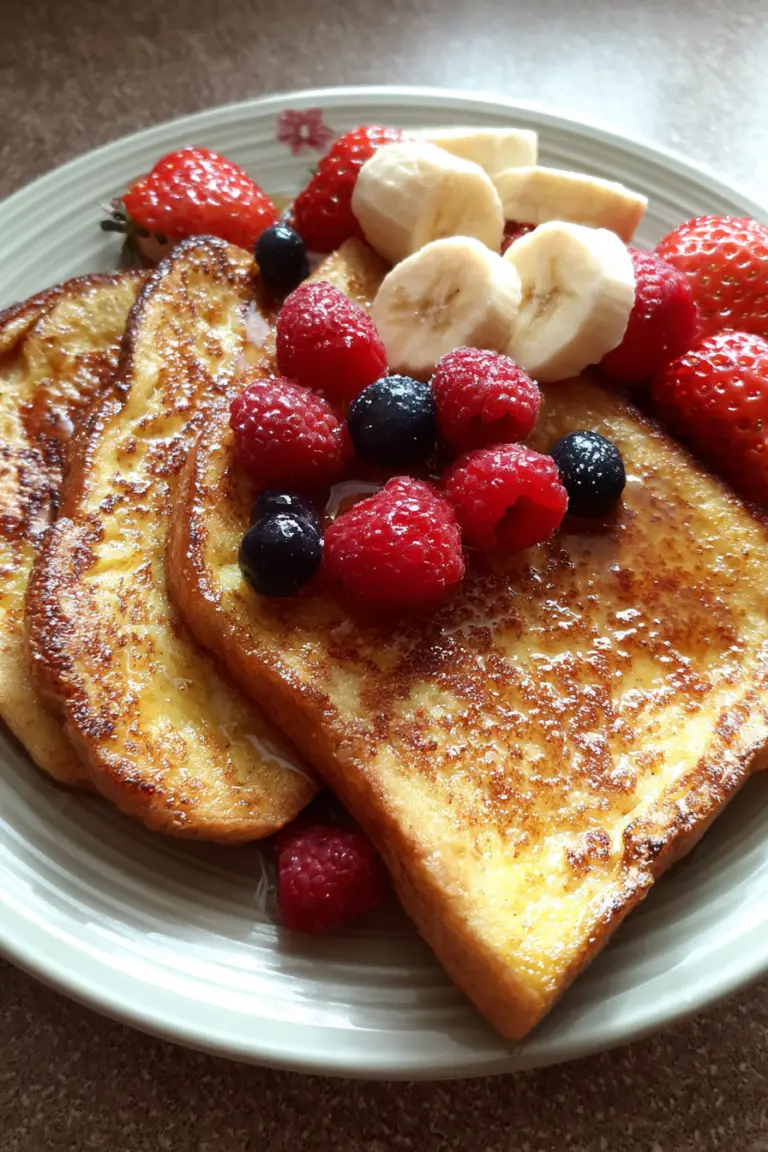
Easy French Toast Recipe
Oh man, French toast. It’s funny how some foods just stick with you, right? For me, French toast isn’t just breakfast, it’s a whole memory-packed experience. My first real attempt at making it was a total mess when I was, like, ten. I wanted to surprise my mom for Mother’s Day, bless her heart. I remember whisking the eggs and milk in a bowl that was way too small, sloshing it all over the counter.
Then I used this super thin white bread we had for sandwiches, and I soaked each slice until it was basically disintegrating before it even hit the pan. The kitchen filled with smoke because I had the burner on high heat. My mom woke up to the smell of burnt sugar and my frantic cries, but she still ate the one passable (barely) piece I managed to salvage. We laughed about it for years. That day taught me a lot about patience and, well, basic cooking techniques. Now, my Easy French Toast Recipe is a go-to, and I’m pretty sure I’ve finally nailed it.
Recipe Card
| Recipe Title | Easy French Toast Recipe |
|---|---|
| Servings | 4 |
| Prep Time | 5 minutes |
| Cooking Time | 15 minutes |
| Calories | 350 (estimated, varies with bread/toppings) |
Ingredients
- 4 slices day-old bread (like challah, brioche, or Texas toast)
- 2 large eggs
- 1/2 cup milk (whole milk works best!)
- 1 tablespoon granulated sugar
- 1 teaspoon vanilla extract
- 1/2 teaspoon ground cinnamon
- Pinch of salt
- 2 tablespoons butter (for cooking)
Okay, so let’s talk about these ingredients for a sec, because even simple stuff can go sideways.
The bread, oh my goodness, the bread is EVERYTHING. I’ve tried using fresh, soft sandwich bread in a pinch and it just turns into a soggy, floppy mess. You really want something a little sturdier, or at least a day old so it doesn’t just fall apart when you dunk it. Challah or brioche are my absolute favorites, but thick-cut Texas toast works great too.
Eggs are, obviously, kind of important. I once thought “more eggs, more protein!” and tried to use like five eggs for four slices of bread. The batter was super thick, and my French toast ended up tasting kind of eggy and weird, not in a good way. Two eggs for four slices seems to be the sweet spot for a nice, even coating.
Milk is another one where you can play around, but whole milk really gives you that rich, creamy texture. I’ve used skim milk before when I was trying to be “healthy,” and it just tasted a little… thin. You can even use a splash of half-and-half or heavy cream if you’re feeling fancy, but regular whole milk is perfect for this Easy French Toast Recipe.
Sugar is just for a little sweetness in the batter. You can skip it if you prefer, especially if you’re going to load up on syrup later. I once forgot the sugar and the vanilla, and it just tasted like cooked bread and eggs. Not bad, but definitely missing that certain something that makes French toast so comforting.
Vanilla extract is that secret ingredient that makes it smell and taste amazing. Don’t skip it! I once ran out and thought, “eh, it’s fine,” but nope. It wasn’t fine. It truly elevates the flavor from just “eggy bread” to “delicious French toast.”
Cinnamon adds a wonderful warmth. A little pinch goes a long way. I’ve accidentally dumped way too much in before, and it was a bit overwhelming. It tasted like I was eating a spiced candle, which wasn’t the vibe I was going for. So, just a half teaspoon is perfect for a subtle hint of spice.
And a tiny pinch of salt actually helps bring out all the flavors, balancing the sweet and savory. It’s one of those things you don’t really notice when it’s there, but you miss it when it’s gone.
Finally, butter for cooking. Don’t cheap out here! Butter gives it that beautiful golden-brown crust and a nutty flavor. I tried using cooking spray once to save calories, and it just didn’t get that nice sear or flavor. The French toast just kind of looked sad and pale.
Directions
- In a shallow dish (a pie plate or a shallow bowl works great), whisk together the eggs, milk, sugar, vanilla extract, cinnamon, and salt until everything is well combined and no streaks of egg yolk remain.
- Heat a large non-stick skillet or griddle over medium heat. Add about half a tablespoon of butter and let it melt and coat the pan.
- Dip each slice of bread into the egg mixture, one at a time. Make sure both sides are evenly coated but don’t let it soak for too long – just a few seconds per side should do it.
- Place the dipped bread slices onto the hot, buttered skillet. Don’t overcrowd the pan; cook 2-3 slices at a time, depending on your pan size.
- Cook for about 3-4 minutes per side, or until golden brown and cooked through.
- Add more butter to the pan as needed between batches to prevent sticking and ensure even browning.
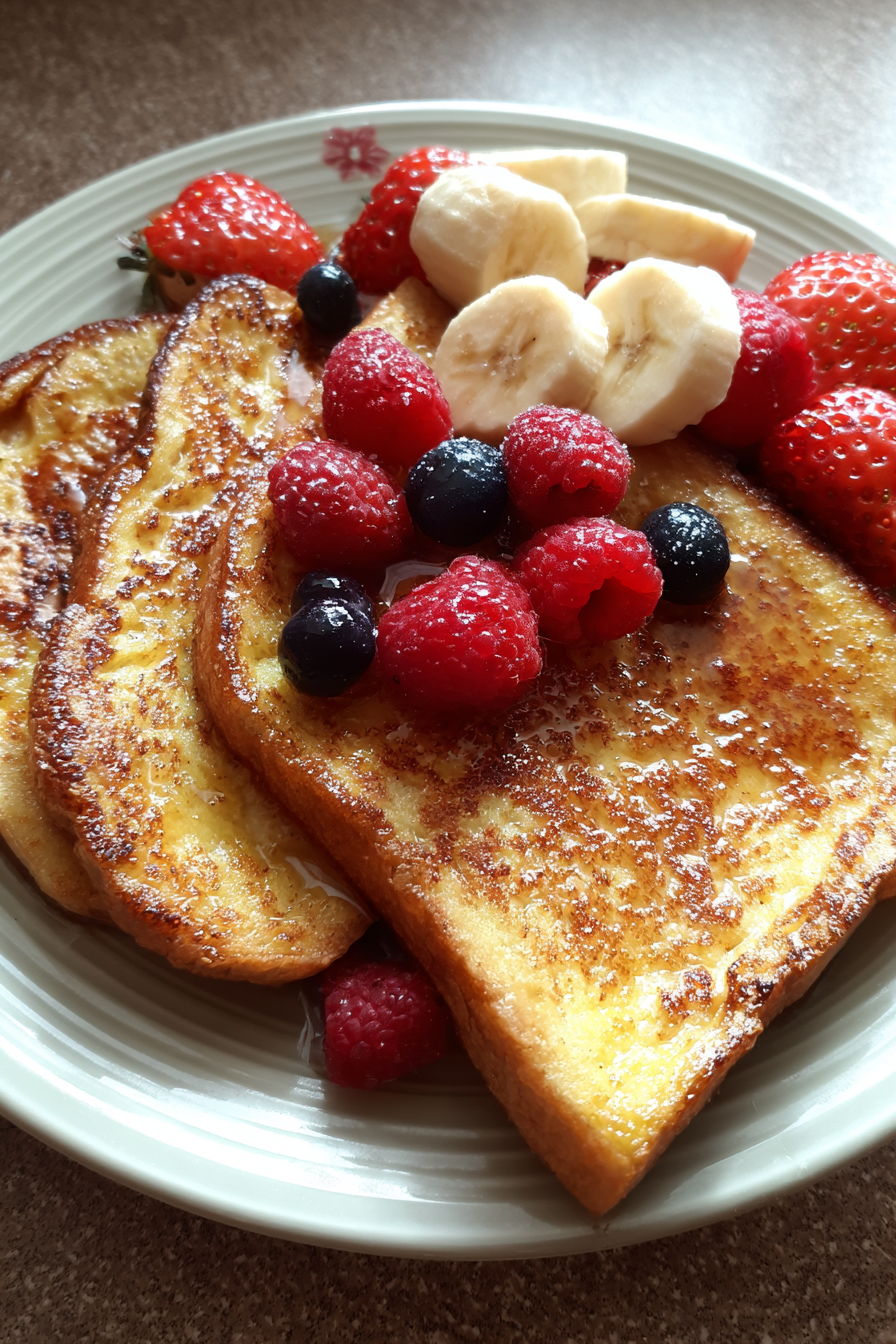
- Serve immediately with your favorite toppings like syrup, fresh fruit, or powdered sugar.
Okay, so the directions sound simple enough, right? But oh, how many ways I’ve messed these up over the years. That first step, whisking the batter, sounds straightforward. But I used to be so lazy, just giving it a quick stir. Then you get those little bits of unmixed egg white on your French toast, and it’s just not appealing. Whisk it well, friend, until it’s smooth and pale yellow. No lumps!
The dipping part is probably where most people, including my past self, go wrong. I used to either barely dip it, so the inside was dry and bland, or I’d let it sit in the mixture for what felt like an eternity. That’s when you get the dreaded “soggy middle” French toast that falls apart when you try to flip it. For normal bread, a quick 3-5 seconds per side is perfect. If you’re using really thick, dense bread, maybe a tad longer, but still keep an eye on it!
And the heat! Oh boy, the heat. I can’t tell you how many pieces of French toast I’ve scorched because I had the burner on too high, thinking it would cook faster. You end up with a dark brown, almost black crust on the outside, and the inside is still a little raw and eggy. No thanks. Medium heat, give it a few minutes to preheat, and be patient. That even, golden-brown color is what you’re aiming for. It’s not a race, it’s breakfast perfection.
This Easy French Toast Recipe is seriously one of my all-time favorites. It’s like a warm hug on a plate. It brings me back to those childhood mornings, even the messy ones. I love how it transforms simple pantry staples into something that feels special and indulgent. It’s definitely a comfort food for me, and it’s become a Sunday morning ritual with my family. My kids are now at the age where they try to “help” me whisk the batter, and I totally let them, even if it means a little more cleanup. It reminds me of my own first attempt, just with less smoke.
One thing I’ve learned is that French toast is surprisingly forgiving once you get the hang of the soaking and heat. It’s also great for using up bread that’s just a little past its prime, which is a win in my book. And if you make a big batch, it reheats surprisingly well in the toaster or even a quick zap in the microwave, though it won’t be quite as crispy. It’s not really a one-pot meal, but it’s close enough for how simple the cleanup is. I wouldn’t call it a “healthy swap” necessarily, but you can definitely make adjustments for different dietary needs.
Nutrition Info (per serving)
| Calories | Carbs | Fat | Protein |
|---|---|---|---|
| 350 | 40g | 15g | 12g |
(Please note: These are estimated values and will vary depending on the exact ingredients, bread type, and any toppings you add.)
Does the nutrition surprise me? Honestly, not really. Between the bread, eggs, milk, and butter, it adds up pretty quickly! When I first started paying attention, I was a little taken aback, but it’s a treat, right? I’ve definitely tried to make it lighter/healthier by using whole wheat bread, skim milk, or less butter in the pan. It’s still good, but you do lose a bit of that richness that makes it, well, French toast. For people with special diets, you can totally use gluten-free bread, or plant-based milk and egg substitutes. Just be prepared for the texture to be a little different. It’s still a delicious breakfast, just not *exactly* the same.
Ingredient Swaps
| Ingredient | Substitution |
|---|---|
| Day-old bread | Fresh brioche, challah, Texas toast, whole wheat bread, gluten-free bread |
| Whole milk | Skim milk, almond milk, oat milk, heavy cream, half-and-half |
| Granulated sugar | Brown sugar, maple syrup (a tiny bit in the batter), honey, stevia |
| Cinnamon | Nutmeg, pumpkin pie spice, cardamom |
| Vanilla extract | Almond extract, orange zest |
So, these swaps? Some are total game-changers, and some are… well, not so much. Using fresh brioche or challah instead of day-old bread is amazing if you’re looking for a really decadent French toast – it soaks up the batter beautifully and gets incredibly soft. Whole wheat bread works, but it can be a bit chewier and less “fluffy” feeling. Gluten-free bread is a must for some, but you have to be careful as some brands can fall apart easily.
For milk, using cream or half-and-half makes it unbelievably rich, like a dessert. But skim milk or almond milk, while lighter, definitely makes the French toast a bit less flavorful and creamy. I find oat milk actually works pretty well if you need a non-dairy option; it has a nice richness. As for sugar, a tiny bit of brown sugar in the batter adds a lovely caramel note, which is a nice switch. I tried using maple syrup directly in the batter once, and it made the batter a little too thin and sugary, causing the toast to brown *super* fast, almost burning before it was cooked through. So, stick to granulated or brown sugar in the batter, and save the syrup for the top!
Tips
- **Use slightly stale or day-old bread:** This is probably the most crucial tip! Stale bread is firmer and absorbs the egg mixture without getting mushy. Fresh bread tends to just disintegrate.
- **Don’t over-soak or under-soak:** Aim for even saturation. A few seconds per side is usually enough. You want it moist, not dripping wet or bone dry.
- **Don’t overcrowd the pan:** Give each slice space to cook evenly and get that beautiful golden crust. Cooking too many at once cools down the pan and leads to sad, pale French toast.
- **Maintain medium heat:** Patience is key. Too high, and it burns; too low, and it just dries out and gets tough.
- **Always preheat your pan:** Just like with pancakes, the first piece always comes out best if the pan is properly heated before anything touches it.
I wish I had known that “don’t over-soak” rule earlier in my life. Seriously, it would have saved so many tears over disintegrating bread. My biggest mistake used to be that I was so scared of dry French toast that I’d let it swim in the batter. Then I’d try to lift it with a spatula, and it would just collapse into a pile of eggy mush. It was so frustrating! I finally learned that a quick, even dip is all you need for most breads. Another thing? Overcrowding the pan. I’d try to squeeze in an extra slice, thinking I was saving time, but then all the pieces would cook unevenly. Some would be pale, others burnt on one side. Just give them space. It’s worth the extra minute or two to cook them in batches.
FAQ
**Q: Why is my French toast soggy in the middle?**
A: Ah, the dreaded soggy middle! This usually happens for a couple of reasons. Either you’re letting your bread soak in the egg mixture for too long, or your pan isn’t hot enough when you put the bread in. If the pan isn’t hot enough, the outside doesn’t cook quickly enough to set the batter, and the heat doesn’t penetrate the center to cook the soaked bread. Make sure your bread is just evenly coated, not dripping wet, and your pan is properly preheated over medium heat.
**Q: Can I make French toast ahead of time?**
A: You totally can! I do this all the time for busy mornings. Cook it as directed, let it cool completely on a wire rack, and then you can store it in an airtight container in the fridge for 2-3 days. For longer storage, wrap individual slices in plastic wrap and then foil, and freeze them for up to a month. To reheat, pop them in the toaster, toaster oven, or even an air fryer for a few minutes until hot and slightly crispy. The microwave works too, but they won’t be as crisp.
**Q: What kind of bread is best for French toast?**
A: Honestly, it depends on what you like, but a slightly stale, sturdy bread is always the winner. Brioche and challah are my absolute top picks because they’re rich, slightly sweet, and soak up the batter beautifully without falling apart. Texas toast is also fantastic because of its thickness. Even a good sourdough or a rustic white loaf that’s a day or two old works wonders. Avoid super soft, thin sandwich bread unless it’s a desperate situation – it tends to get too mushy.
**Q: My French toast sticks to the pan! What am I doing wrong?**
A: Oh man, that’s so annoying! Usually, this means one of two things: either you didn’t use enough butter (or fat) in the pan, or your pan isn’t truly non-stick anymore. Make sure you’re adding fresh butter for each batch, and that it’s melted and coating the entire cooking surface. If it’s still sticking, it might be time for a new non-stick pan, or try using a well-seasoned cast-iron skillet – those things are amazing for French toast once they’re properly greased. Also, make sure your heat isn’t too low, as that can sometimes cause sticking too.
**Q: How do I know when my French toast is done cooking?**
A: You’re looking for that beautiful golden-brown color on both sides. Also, gently press the center of the toast with your spatula; it should feel slightly firm and spring back a little, not squishy or raw. If you’re super particular, you could use an instant-read thermometer, and it should register around 165°F (74°C) in the center, but honestly, I just go by sight and feel. If it looks good and feels cooked, you’re golden!
That’s everything I know about making Easy French Toast Recipe! Hope you give it a try. And if you mess it up, you’re in good company—I still do it sometimes.
Easy French Toast Recipe
Rediscover a breakfast classic with this easy French Toast recipe, perfected over years to guarantee a golden-brown, custardy delight. It’s a comforting dish that transforms simple pantry staples into a special and indulgent start to your day.
Ingredients
- 4 slices day-old bread (like challah, brioche, or Texas toast)
- 2 large eggs
- 1/2 cup whole milk
- 1 tablespoon granulated sugar
- 1 teaspoon vanilla extract
- 1/2 teaspoon ground cinnamon
- Pinch of salt
- 2 tablespoons butter (for cooking)
Instructions
-
In a shallow dish (a pie plate or a shallow bowl works great), whisk together the eggs, milk, sugar, vanilla extract, cinnamon, and salt until everything is well combined and no streaks of egg yolk remain.
-
Heat a large non-stick skillet or griddle over medium heat. Add about half a tablespoon of butter and let it melt and coat the pan.
-
Dip each slice of bread into the egg mixture, one at a time. Make sure both sides are evenly coated but don’t let it soak for too long – just a few seconds per side should do it.
-
Place the dipped bread slices onto the hot, buttered skillet. Don’t overcrowd the pan; cook 2-3 slices at a time, depending on your pan size.
-
Cook for about 3-4 minutes per side, or until golden brown and cooked through.
-
Add more butter to the pan as needed between batches to prevent sticking and ensure even browning.
-
Serve immediately with your favorite toppings like syrup, fresh fruit, or powdered sugar.
Nutrition (Per Serving)