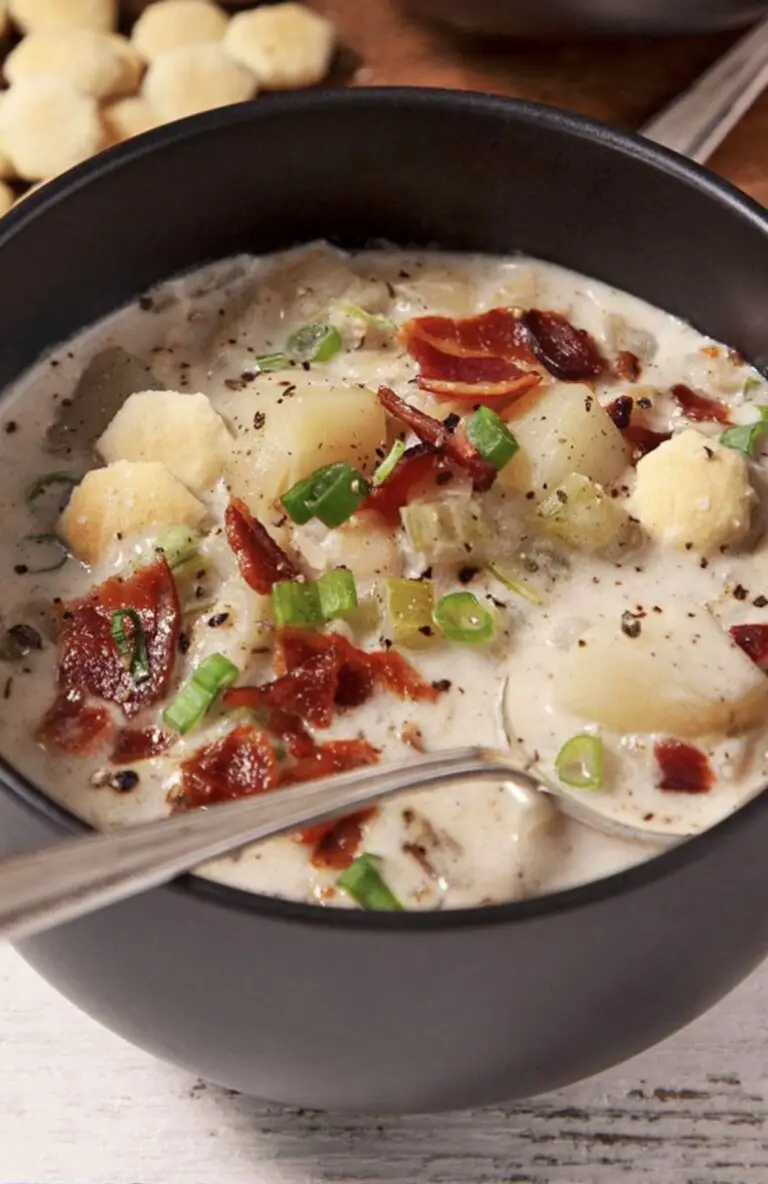
Creamy Clam Chowder Recipe
The first time I tried to make Creamy Clam Chowder, it was for my husband’s birthday. He’s a big fan of seafood, and I wanted to do something special. I’d watched my grandma make it a hundred times, but she always just “eyeballed” everything, which is not super helpful when you’re starting out. I remember feeling so confident, like, how hard can it be? Well, it turns out, pretty hard if you don’t know what you’re doing. I ended up burning the bacon, my roux was lumpy, and I added the milk too fast so it curdled into weird little bits. The potatoes were still crunchy, and the clams tasted like rubber because I cooked them for too long. It was a disaster, bless his heart, he still ate a bowl of it to be polite. But we ended up ordering pizza, and that chowder went straight into the trash. It took a few more tries, and a lot of note-taking, but I finally nailed it, and now this Creamy Clam Chowder Recipe is a true family favorite, especially on a chilly night.
Recipe Card
| Recipe Title | Creamy Clam Chowder Recipe |
|---|---|
| Servings | 6-8 |
| Prep Time | 25 minutes |
| Cooking Time | 45 minutes |
| Calories | About 450 per serving |
Ingredients
- 6 slices thick-cut bacon, diced
- 1 large yellow onion, diced
- 2 celery stalks, diced
- 2 cloves garlic, minced
- 1/2 cup all-purpose flour
- 4 cups clam juice (or 2 bottles, 8 oz each, plus water to make 4 cups)
- 2 bottles (6.5 oz each) chopped clams, drained, liquid reserved
- 4 cups russet potatoes, peeled and diced into 1/2-inch cubes
- 1 teaspoon dried thyme
- 1/2 teaspoon black pepper
- 1/4 teaspoon salt (or to taste)
- 2 cups whole milk
- 1 cup heavy cream
- 2 tablespoons fresh parsley, chopped, for garnish
Oh boy, ingredients. They seem so simple, but each one plays a crucial role. Like the bacon – it’s not just for flavor; that rendered fat is the base for our roux. I once tried to skimp and use only a couple of slices, thinking “less fat, healthier!” but the chowder lacked that smoky depth, and I had to add butter to make up for the fat, which just wasn’t the same.
The onion and celery, those aromatics, they’re not just filler. They build the foundation of flavor. One time I was in a rush and didn’t chop them finely enough, and my chowder had these big, chunky, half-cooked bits of onion that were super distracting. Take your time with the knife here, it makes a difference in texture.
Garlic, of course. Don’t burn it! I’ve had garlic turn bitter on me more times than I care to admit because I threw it in too early or on too high heat. It only needs a minute or so to get fragrant.
Flour and clam juice are the thickeners and the main liquid. The flour helps create that creamy texture we all love. I remember the very first time, I just kinda dumped the flour in with the bacon fat and it turned into a solid, unmixable lump. My roux was a rock! You gotta whisk it constantly, and add the liquid gradually. For the clam juice, I usually buy two bottles and then add enough water to get to four cups. Sometimes I’ve tried using just water, and it tasted kinda bland, like it was missing that ocean-y essence.
Those chopped clams – they’re the star, right? Don’t grab the whole clams unless you plan to chop them yourself, which is extra work. Make sure to drain them, but save that liquid! It’s liquid gold for flavor. I once forgot to drain them properly, and the chowder ended up way too watery and just tasted… off. And please, please, please, don’t add them until the very end, or they’ll be tough as shoe leather.
Potatoes are so important for the body of the chowder. Russets are my go-to because they break down a little and help thicken things up naturally. I experimented once with red potatoes because that’s all I had, and they stayed too firm, making the chowder feel less comforting and more like a potato soup. You want those cubes to be about half an inch, so they cook evenly and can get soft without turning to mush.
Thyme, pepper, and salt are your seasonings. Thyme just tastes like classic chowder to me. Be careful with the salt because bacon and clam juice are already salty. Always taste as you go! I’ve over-salted a whole batch because I wasn’t paying attention, and it was practically inedible. You can always add more, but you can’t take it out.
The whole milk and heavy cream are what give it that luscious creaminess. Don’t go low-fat here, trust me. I tried once with 2% milk and it just didn’t have that rich, luxurious texture. It felt thin and sad. And adding them slowly and warming them up a bit before adding them to the hot chowder can prevent curdling, which I learned the hard way that first time. Nothing worse than seeing your beautiful chowder separate!
And fresh parsley for garnish? Totally optional, but it adds a nice pop of color and freshness. Don’t skip it if you want it to look fancy, even if it’s just for yourself.
Directions
- In a large Dutch oven or pot, cook the diced bacon over medium heat until crispy. Remove bacon with a slotted spoon, reserving about 2 tablespoons of fat in the pot. Set crispy bacon aside.
- Add diced onion and celery to the reserved bacon fat. Sauté over medium heat until softened, about 5-7 minutes.
- Stir in minced garlic and cook for another minute until fragrant.
- Sprinkle flour over the vegetables and stir constantly for 2 minutes to cook out the raw flour taste, creating a roux.
- Gradually whisk in the clam juice (and reserved clam liquid), a little at a time, until smooth and no lumps remain. Bring to a gentle simmer.
- Add the diced potatoes, dried thyme, black pepper, and salt. Bring back to a gentle simmer, then reduce heat to low, cover, and cook for 15-20 minutes, or until potatoes are fork-tender.
- Once potatoes are tender, stir in the whole milk and heavy cream. Heat gently, stirring frequently, but do not boil.
- Add the drained chopped clams and heat through for just 2-3 minutes. Do not overcook!
- Taste and adjust seasoning if needed. Serve hot, garnished with reserved crispy bacon and fresh parsley.
Okay, let’s talk about some of these steps, because I’ve definitely messed them up. Step 1, cooking the bacon: This seems simple, but I once burned a whole batch because I walked away for “just a second” to check my phone. Nope. Bacon goes from perfectly crispy to charred in a heartbeat. Keep an eye on it! Also, don’t drain *all* the fat. That reserved fat is key for flavor and starting the roux right.
Step 4, making the roux: This is where my first chowder went horribly wrong. I just dumped the flour in, and it turned into a clumpy mess. The trick is to sprinkle it evenly and whisk, whisk, whisk! You gotta cook that flour for a couple of minutes too; otherwise, your chowder will taste like raw flour, and nobody wants that. It’s gotta turn slightly golden, like a pale peanut butter color.
Then comes Step 5, adding the liquid. This is another prime spot for lumps. You absolutely *have* to whisk in the clam juice gradually. Add a little, whisk until it’s smooth, then add a little more. If you dump it all in at once, you’ll be fighting lumps for days. I tried once to just stir it in with a spoon, thinking it would be fine, but no, you need that whisk to really incorporate everything smoothly.
And finally, Step 7 and 8, adding the dairy and clams. My biggest mistake here was getting the chowder too hot after adding the milk and cream, or adding them cold straight from the fridge. Boom, curdled. It looks awful, and it tastes kinda weird. You want to heat it *gently* and stir frequently. Don’t let it boil! And the clams? Oh, the poor clams. I overcooked them so many times, thinking they needed to simmer with everything else. They turn into little rubber bands. They just need to warm through, two or three minutes at most. Seriously, add them right at the very end.
After nailing this Creamy Clam Chowder Recipe, it became my go-to for chilly evenings or when someone in the family is feeling under the weather. It’s the ultimate comfort food, warming you from the inside out. My kids, who are usually picky eaters, absolutely devour this. It’s funny because when I first started making it, I thought it was this super fancy, complicated dish, but once you get the hang of a few tricks, it’s really an easy dinner. I’ve even found it makes for great leftovers, perfect for a quick lunch the next day, though sometimes the potatoes soak up more liquid, so you might need a splash of milk to thin it back out.
One time, I tried to make a “healthy swap” by using low-fat milk and barely any bacon. Honestly? It was a pale imitation. It lacked the richness, the smoky depth, and that creamy mouthfeel that makes clam chowder so darn good. Sometimes, you just gotta embrace the comfort of a dish. While I wouldn’t call it a “one-pot meal” in the strictest sense because of removing the bacon, it’s pretty close, and cleanup isn’t too bad. I always think about trying to add corn to it for a bit of sweetness, but I haven’t been brave enough to mess with my now-perfected recipe. Maybe next time, a small batch experiment!
Nutrition Info (per serving)
| Calories | Carbs | Fat | Protein |
|---|---|---|---|
| 450 | 35g | 28g | 18g |
Yeah, the nutrition info definitely isn’t surprising for a creamy dish with bacon and potatoes, right? It’s not exactly a diet meal, and that’s okay! It’s comfort food, and sometimes you just need that. I haven’t really tried to make it dramatically lighter because, honestly, the whole point for me is that creamy, indulgent feel. If you’re on a special diet, like dairy-free, you could probably try almond milk and vegan butter, but I can’t vouch for the flavor or texture because I haven’t gone down that road myself. For gluten-free folks, just swap the all-purpose flour for a gluten-free all-purpose blend, and it usually works fine for the roux.
Ingredient Swaps
| Ingredient | Substitution |
|---|---|
| Russet Potatoes | Yukon Gold potatoes (will be slightly less starchy) |
| Whole Milk | Half-and-half (for a richer chowder, or 2% milk for slightly lighter) |
| Heavy Cream | Half-and-half (will make it less rich) |
| Chopped Clams | Fresh clams, steamed and chopped (more work, different flavor profile) |
| Clam Juice | Fish stock or seafood broth |
When it comes to ingredient swaps, you gotta be careful because it can really change the final dish. Using Yukon Gold potatoes instead of russets works, but your chowder might not be quite as thick because Yukon Golds don’t break down as much. It’s a subtle difference, but noticeable. As for the dairy, half-and-half is a pretty good middle ground if you want it a little less rich than whole milk and heavy cream, but still creamy. I definitely wouldn’t go lower than 2% milk, because anything less just makes it too watery and sad.
Trying fresh clams once was an adventure. I thought it would be super fancy, but steaming them open, cleaning them, and then chopping them was way more effort than I bargained for, and frankly, I didn’t notice *that* much of a difference in the final chowder to justify the extra work. Plus, I ended up with some gritty bits, which was a total turn-off. Canned, chopped clams are my tried and true! As for clam juice, you can use fish stock or seafood broth, but make sure it’s not too strong or overly fishy, or it’ll overpower the delicate clam flavor. I once grabbed some super concentrated fish broth by mistake, and my chowder tasted like I was eating straight out of the ocean, in a bad way. Stick to good quality clam juice if you can.
Tips
- Don’t rush the roux. Cook it for at least 2 minutes to get rid of that raw flour taste.
- Gradually whisk in the liquid for a smooth, lump-free chowder.
- Don’t boil the chowder after adding dairy, and add clams at the very end to prevent rubberiness.
- Taste and adjust seasoning frequently, especially after adding clam juice and bacon, which are already salty.
- Use quality ingredients. A good clam juice and thick-cut bacon make a huge difference.
These tips are basically a highlight reel of my past chowder fails, haha. The biggest one I wish I knew earlier was about not rushing the roux. I can’t tell you how many batches I made where I thought I was cooking the flour long enough, only to take a bite and realize it tasted like I just threw a spoonful of raw flour in there. It’s an unmistakable, unpleasant taste. You really need to give it those two minutes, stirring constantly, for it to properly cook out and turn into a golden, nutty base. It takes patience, which I don’t always have, but it’s crucial for the texture and flavor. And for the love of all that is delicious, remember the gradual whisking of the liquid! That lumpy chowder I made for my husband’s birthday? All because I just poured the clam juice in like it was water. Live and learn, right?
FAQ
Q: My chowder is too thin. How can I thicken it?
A: This usually means your roux wasn’t thick enough, or you added too much liquid. You can make a quick slurry by mixing a tablespoon of cornstarch with a tablespoon of cold water until smooth. Slowly whisk this into your simmering chowder and let it cook for a few minutes until it thickens. Don’t add too much at once, or it’ll get gummy! You can also just let it simmer uncovered for a bit longer, letting some of the liquid evaporate naturally.
Q: Can I use fresh clams instead of canned?
A: Absolutely, if you’re feeling ambitious! You’ll need about 3-4 pounds of fresh clams (like littlenecks or cherrystones). Steam them open with a little water or white wine until they open, then shuck them, chop the meat, and strain the liquid. Make sure to rinse the clams well before steaming to get rid of any grit. It’s more work, and can be gritty if not cleaned properly, but gives a lovely fresh flavor. Just be sure to add them to the chowder at the very end, just like the canned ones, so they don’t get tough.
Q: Why did my chowder curdle?
A: Oh, I’ve been there! It usually happens because you’ve added cold dairy directly to a hot liquid, or you’ve let the chowder boil after adding the milk and cream. Dairy is delicate! To avoid this, try to warm your milk and cream slightly before adding them, or at least let them sit at room temp for a bit. Always add them slowly, stirring constantly, and never let the chowder come to a rolling boil once they’re in. Just a gentle simmer is perfect for heating through.
Q: Can I freeze leftover clam chowder?
A: You *can*, but I don’t really recommend it. Cream-based soups, especially those with potatoes, tend to separate and get a weird, grainy texture when frozen and thawed. The potatoes also get mealy. If you absolutely have to, thaw it slowly in the fridge, then reheat gently on the stove, whisking frequently. You might need to add a splash of fresh milk or cream to bring back some of that smoothness. It’s definitely best eaten fresh or within a couple of days from the fridge.
That’s everything I know about making Creamy Clam Chowder Recipe! Hope you give it a try. And if you mess it up, you’re in good company—I still do it sometimes.