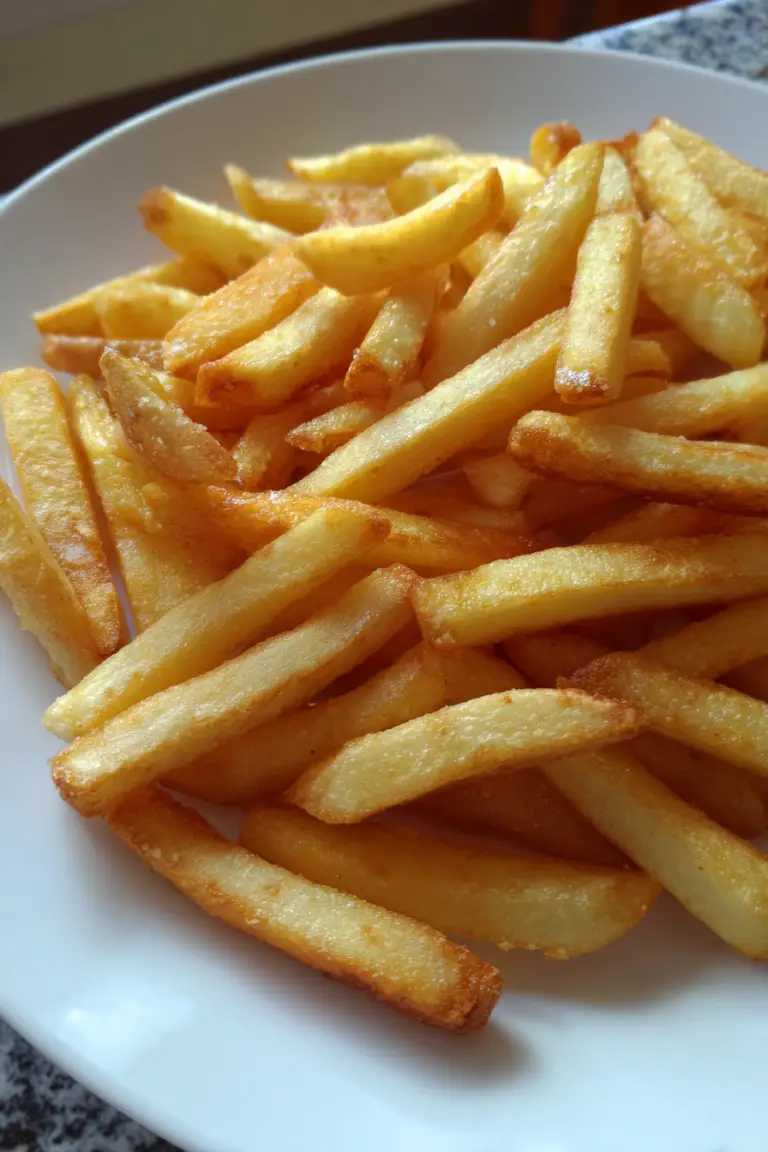
Crispy French Fries Recipe
Oh man, French fries. There’s just somethin’ about a perfectly crispy, salty fry, isn’t there? For years, I just bought the frozen kind, thinking there was no way I, a regular person with a regular kitchen, could make ’em myself. My first attempt at homemade crispy French fries recipe was a total disaster. I remember it vividly: a Saturday afternoon, my roommate was out, and I decided to be adventurous. I sliced up some potatoes all willy-nilly, didn’t soak ’em, and just dumped ’em into a pot of oil that was probably way too hot. What I got was a batch of sad, greasy, half-burnt, half-raw potato sticks that tasted vaguely of regret. I ate them anyway, because waste not, want not, but I definitely felt like a failure. It took a lot of soggy fries and splattering oil incidents, but eventually, I figured it out. And now? Now, I practically make a whole meal out of just the fries sometimes, they’re that good.
Recipe Card
| Recipe Title | Crispy French Fries Recipe |
|---|---|
| Servings | 4 lucky people |
| Prep Time | 30 minutes (including soak time) |
| Cooking Time | 20-25 minutes |
| Calories | About 450 per serving (totally worth it) |
Ingredients
- 4 large Russet potatoes
- 6-8 cups neutral oil for frying (like peanut, canola, or vegetable oil)
- 1-2 tablespoons salt, or to taste
- Optional: Paprika, garlic powder, or your favorite fry seasoning
So, these ingredients might look simple, but each one plays a starring role in getting those perfectly crispy French fries. I learned this the hard way. For instance, those Russet potatoes? They’re your best friend for fries. One time, I thought “a potato is a potato” and grabbed some red potatoes I had lying around. Big mistake. They have too much moisture and not enough starch, so they just get soggy and sad, never truly crisping up. It was a mushy, disheartening experience.
And the oil? Don’t skimp on the oil or use the wrong kind. I once tried to use olive oil because I thought it was “healthier,” and my kitchen filled with smoke because olive oil has a low smoke point. Plus, the fries tasted a little… fruity? Not in a good way. You really need a neutral-flavored oil that can handle high heat without burning or imparting weird flavors, like peanut or canola. And you need enough of it so the fries can swim, not just float on top of a thin layer.
The salt is obvious, right? But the timing of when you salt is key. Sprinkle it on right when they come out of the oil, while they’re still hot and wet from the oil. The salt will stick perfectly. If you wait ’til they cool even a little, it just slides right off. I’ve made that mistake too many times, ending up with unsalted fries and a pile of salt at the bottom of the bowl.
Directions
- Wash and peel the Russet potatoes.
- Cut the potatoes into even 1/4 to 1/2 inch thick sticks.
- Place the cut potatoes in a large bowl, cover with cold water, and soak for at least 20 minutes (or up to a few hours in the fridge).
- Drain the potatoes thoroughly and spread them out on a clean kitchen towel or paper towels. Pat them completely dry—this is SUPER important.
- In a large, heavy-bottomed pot or Dutch oven, pour in enough oil to reach about 2-3 inches deep. Heat the oil to 300°F (150°C).
- Carefully add about a third of the dried potato sticks to the hot oil. Fry for 5-7 minutes until they are soft and slightly cooked through but not browned.
- Remove the fries with a slotted spoon and place them on a wire rack set over a baking sheet. Let them cool for at least 10 minutes.
- Increase the oil temperature to 375°F (190°C).
- Working in batches, return the cooled fries to the hotter oil. Fry for another 3-5 minutes, stirring occasionally, until they are golden brown and perfectly crispy.
- Remove the fries from the oil, drain briefly, and immediately transfer them to a bowl. Season generously with salt (and any other desired seasonings).
- Serve hot and enjoy!
Okay, so those steps sound straightforward, right? But let me tell you, there are a couple of spots where I’ve messed up royally. The soaking step? Yeah, don’t skip that. The first time I tried making fries, I just cut ’em and threw ’em straight into the oil. They ended up kinda pale, a bit limp, and never got that really nice, even crispness. Soaking pulls out some of the surface starch, which is what helps them get super crispy and prevents them from sticking together. It’s an extra step, but totally worth it.
And that whole “pat them completely dry” bit? Seriously, don’t ignore that. I once thought “mostly dry is good enough.” Nope. When you drop wet potatoes into hot oil, two things happen: first, the oil splatters everywhere, turning your kitchen into a greasy minefield and risking a burn. Trust me, I’ve jumped back from the stove more than once. Second, all that water has to evaporate before the potatoes can start frying properly, which cools down your oil dramatically and leads to soggy, sad fries. Take the extra five minutes to really get them dry, it’s a game-changer.
After the recipe card, let me just say, making crispy French fries from scratch has been a journey. My kitchen has seen its share of fry-related mishaps—the smoke alarms going off, the overly greasy batches, the times I nearly ran out of oil mid-fry because I underestimated how much you really need. But through it all, it’s become one of my favorite comfort food recipes to nail. There’s something so satisfying about turning a humble potato into something truly magical.
It’s not exactly a “healthy swap” or “one-pot” kind of meal, let’s be real. It’s a treat, a special occasion kind of thing for a regular weeknight. For my family, it’s become a Friday night tradition, a reward for making it through the week. The kids go nuts for them, and honestly, so do I. It might not be the easiest dinner to whip up, but the joy it brings makes every step worth it.
What would I change next time? I’m always experimenting with different seasoning blends. Sometimes I go simple with just salt, other times I mix in smoked paprika and a pinch of cayenne for a little kick. I’ve even tried a lemon pepper seasoning that was surprisingly good. It’s one of those recipes where the core technique is vital, but the flavor profile can be totally customized, which keeps it exciting.
Nutrition Info (per serving)
| Calories | Carbs | Fat | Protein |
|---|---|---|---|
| 450 | 55g | 25g | 6g |
Okay, so looking at those nutrition numbers, it’s pretty clear this isn’t exactly a diet food, right? And honestly, that doesn’t surprise me one bit. We’re deep-frying potatoes here! I’ve tried making them “healthier” by using an air fryer, and while they’re good, they’re just not the same level of crispy magic as a properly deep-fried fry.
For folks with special diets, it’s naturally gluten-free if you keep the seasonings simple. Vegan, too! If you’re watching calories or fat, my best advice is to enjoy these as an occasional treat. Maybe serve smaller portions, or have them alongside a lighter main dish, like a grilled chicken salad. It’s all about balance, right? Sometimes, you just need a really good fry.
Ingredient Swaps
| Ingredient | Substitution |
|---|---|
| Russet potatoes | Yukon Gold potatoes, Sweet potatoes |
| Peanut/Canola oil | Sunflower oil, Safflower oil |
| Salt | Sea salt, garlic salt, cajun seasoning |
When it comes to ingredient swaps, I’ve had my share of experiments, some more successful than others. Swapping Russet potatoes for Yukon Golds actually works pretty well if you can’t find Russets. They’re a bit waxier, so they don’t get *quite* as fluffy inside, but they still crisp up nicely. Sweet potatoes, though? That’s a whole different ballgame. They taste totally different, obviously, and they tend to brown much faster because of their sugar content. So you really have to watch the temperature and cook them for less time. I burnt a batch of sweet potato fries once because I treated them just like regular ones. My kitchen smelled like burnt sugar for hours.
For oil, sunflower or safflower oil are fine substitutions for peanut or canola. They have high smoke points and neutral flavors, so they do the job just as well. But seriously, avoid olive oil or butter for deep frying. Your smoke alarm will thank you, and your fries won’t taste like burnt grass. And for salt, any kind of fine-grain salt works great. I love using flaky sea salt for a bit more texture, or sometimes I’ll mix in some garlic powder or paprika to the salt for a flavored fry. Cajun seasoning is a winner too, just be careful not to overdo it!
Tips
- **The Double Fry is Non-Negotiable:** Seriously, this is the secret sauce.
- **Soak and Dry, Dry, Dry:** Don’t skip these steps; they prevent soggy, greasy fries.
- **Mind the Oil Temperature:** Too low, and they’ll be greasy. Too high, and they’ll burn outside, raw inside.
- **Don’t Overcrowd the Pot:** Give your fries room to swim and crisp up.
- **Salt Immediately:** As soon as they come out of the oil, season generously.
These tips are basically the commandments of crispy French fry making, and I’ve broken every single one of them at some point. The “don’t overcrowd the pot” rule? Oh man, I learned that one the hard way. I was impatient one time, trying to cook too many fries at once for a party. I thought, “More fries, faster!” But what happened was, all those cold potatoes dropped the oil temperature dramatically.
Instead of frying, the potatoes just kinda sat there, slowly absorbing oil, getting all greasy and limp. By the time I realized my mistake, the whole batch was ruined. It was a greasy, sad mess. I wish someone had really drilled it into my head earlier: patience is key when deep frying. Cook in small batches, let the oil come back up to temperature between each one, and your fries will thank you with their glorious crispiness. It takes longer, but the results are night and day.
FAQ
**Q: My fries always turn out soggy. What am I doing wrong?**
A: Ah, the soggy fry struggle is real! I’ve been there so many times. It’s usually a combination of things. First, did you soak them in cold water? That helps remove excess starch. Second, and this is huge, were they *really* dry before they went into the oil? Any water on them creates steam and stops them from crisping. Third, was your oil hot enough? If the oil temp drops too much (often from overcrowding the pot), the fries just absorb oil instead of frying. And finally, are you double-frying? That first low-temp fry cooks ’em, and the second high-temp fry crisps ’em. Skip any of those, and you’re inviting sogginess.
**Q: What’s the best oil to use for crispy French fries?**
A: For truly crispy fries, you want a neutral-flavored oil with a high smoke point. My go-to is peanut oil because it imparts a nice flavor, but canola, vegetable, or sunflower oil work great too. I made the mistake of trying olive oil once – bad idea, smoked up the kitchen and the fries tasted funky. You need something that can handle the heat without breaking down or adding weird flavors. Don’t cheap out on the oil here; it makes a difference!
**Q: Can I make these in an air fryer to be healthier?**
A: You absolutely can make fries in an air fryer, and they’ll be pretty darn good! But I’ll be honest, they’re not quite the same as deep-fried. They get crispy, but it’s a different kind of crispiness, more like a baked potato wedge than a classic French fry. If you’re going the air fryer route, you’ll still want to soak and dry your potatoes. Toss them with just a little oil (a tablespoon or two) and a pinch of salt before air frying. They’ll be good, just manage your expectations for that “dunked in hot oil” crisp.
**Q: How do I store and reheat leftover fries?**
A: Leftover fries are tricky, ’cause they tend to lose their crispiness quickly. If you have any (which rarely happens in my house!), don’t just microwave them unless you like sad, limp potatoes. The best way to revive them is in an oven or, even better, an air fryer. Spread them in a single layer on a baking sheet or in the air fryer basket and reheat at 375-400°F (190-200°C) for about 5-10 minutes, or until they’re hot and crispy again. They won’t be quite as perfect as fresh, but they’ll be a lot better than soggy microwave fries!
That’s everything I know about making crispy French fries! Hope you give it a try. And if you mess it up, you’re in good company—I still do it sometimes.