
Crispy Homemade French Fries Recipe
Lemme tell ya, the first time I tried to make French fries from scratch, it was a disaster. I was maybe 16, trying to impress my crush who was coming over to “study.” I figured, how hard can it be? Potatoes, oil, boom. Well, I didn’t soak ’em, didn’t dry ’em right, and used some cheap vegetable oil that barely got hot enough. They came out pale, greasy, and floppy. My crush politely ate a few, but I could tell she was thinking, “Wow, these are… potato sticks.” It was embarrassing, but that moment actually sparked a mission. I became obsessed with figuring out how to make truly Crispy Homemade French Fries Recipe. It took a lot of soggy batches and near-miss grease fires, but eventually, I nailed it. And now, it’s one of my go-to comfort foods, a real crowd-pleaser that always takes me back to that kitchen, determined to do better.
Recipe Card
| Recipe Title | Crispy Homemade French Fries Recipe |
|---|---|
| Servings | 4 hungry people |
| Prep Time | 25 minutes |
| Cooking Time | 25-30 minutes |
| Calories | Approx. 380 (without dipping sauce) |
Ingredients
- 2 large Russet potatoes (about 1.5 – 2 pounds)
- 6-8 cups high-smoke-point oil (like peanut, canola, or vegetable oil), for frying
- Plenty of cold water, for soaking
- 1-2 teaspoons Kosher salt, or to taste
Okay, let’s break down these humble ingredients. First off, the potatoes. Russets are king here, y’all. They’re starchy, which is exactly what you want for that fluffy interior and crisp exterior. I once tried making fries with red potatoes because that’s all I had. Big mistake. They came out dense and kinda waxy, not at all the fry experience I was going for. Learn from my error: stick with Russets!
Next up, the oil. This is super important! You need a high-smoke-point oil. Think peanut, canola, or good old vegetable oil. I remember one time, I was feeling fancy and thought, “Olive oil is good for cooking, right?” Oh, the smoke alarm, the smell! Extra virgin olive oil has a low smoke point and will just burn and make your fries taste bitter. Don’t be me. Stick to the tried and true for deep frying.
Cold water for soaking? Absolutely essential. This step washes away excess starch, which is the secret to preventing your fries from sticking together and getting extra crispy. I’ve skipped this step when I was in a rush, thinking “it can’t make *that* much of a difference.” It does. You’ll end up with fries that are less crispy and more prone to browning unevenly. Don’t skip the soak!
And finally, salt. Kosher salt is my preference because the flakes are bigger and stick better, giving you that perfect hit of seasoning. Regular table salt works too, but you might need a little less since it’s finer. Just remember to salt them *right* when they come out of the oil – that’s when they’re hot and the salt clings best. I’ve waited too long before and then the salt just kinda bounces off. Bummer.
Directions
- Wash and peel your Russet potatoes. Using a sharp knife or a mandoline (carefully!), cut them into evenly sized sticks, about 1/4 to 1/3 inch thick.
- Place the cut fries in a large bowl and cover completely with cold water. Let them soak for at least 30 minutes, or even a few hours in the fridge. For super crispy fries, you can even change the water a few times.
- Once soaked, drain the potatoes well. This next part is CRUCIAL: spread them out in a single layer on clean kitchen towels or paper towels. Pat them *bone dry*. Seriously, get ’em as dry as possible.
- In a large, heavy-bottomed pot or Dutch oven, pour in your oil. You want enough oil so the fries can float freely, usually about 3-4 inches deep. Heat the oil over medium-high heat until it reaches 300°F (150°C). Use a thermometer, it’s worth it.
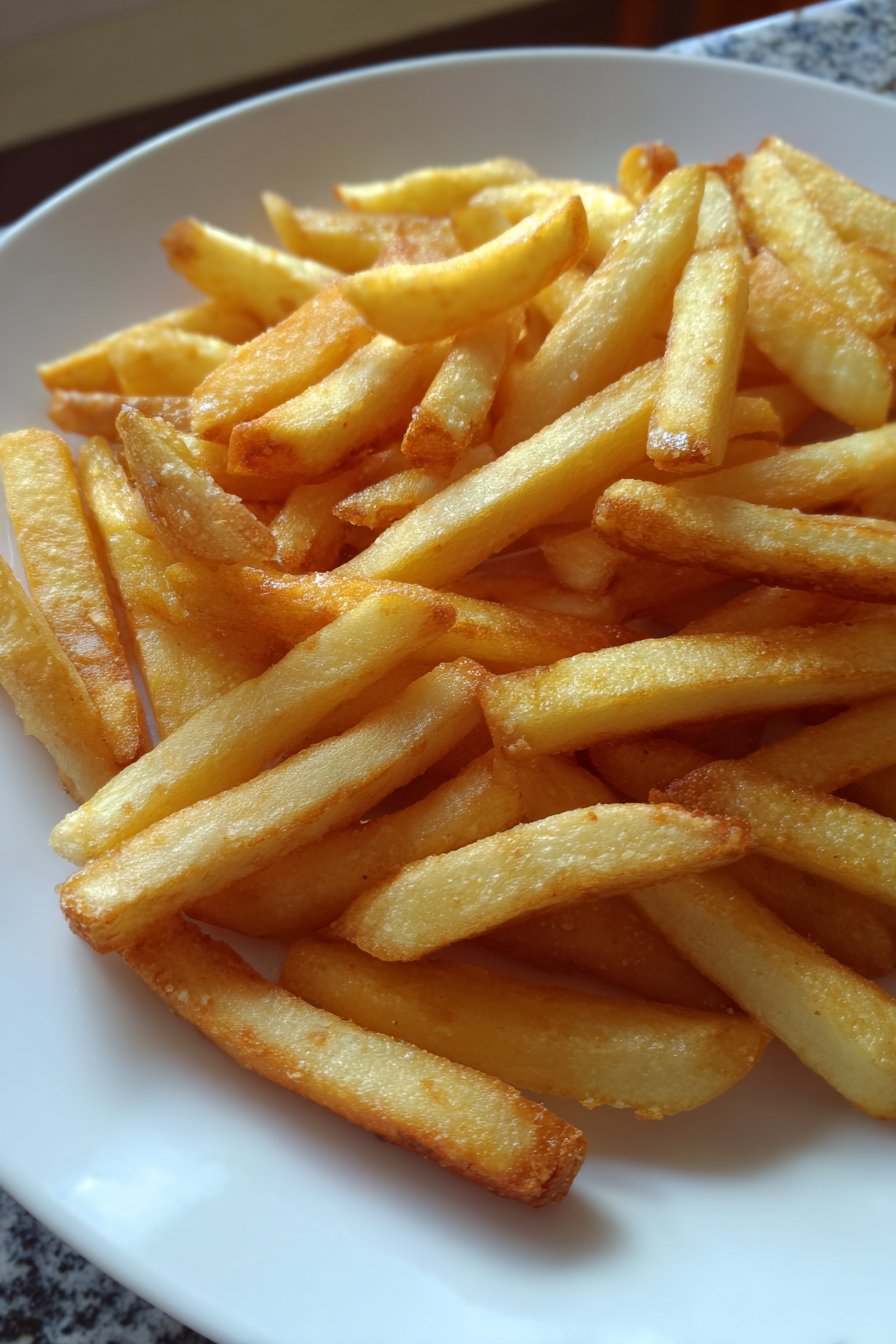
- Carefully add a small batch of fries to the hot oil. Don’t overcrowd the pot! Fry them for about 5-7 minutes, until they’re soft, cooked through, and just barely starting to turn pale yellow. This is the first fry, or “blanching” stage.
- Using a slotted spoon or spider, remove the blanched fries from the oil and transfer them to a wire rack set over a baking sheet. Let them drain and cool completely, at least 15-20 minutes. You can even stick them in the fridge for a bit if you’re patient.
- Once cooled, increase the oil temperature to 375°F (190°C).
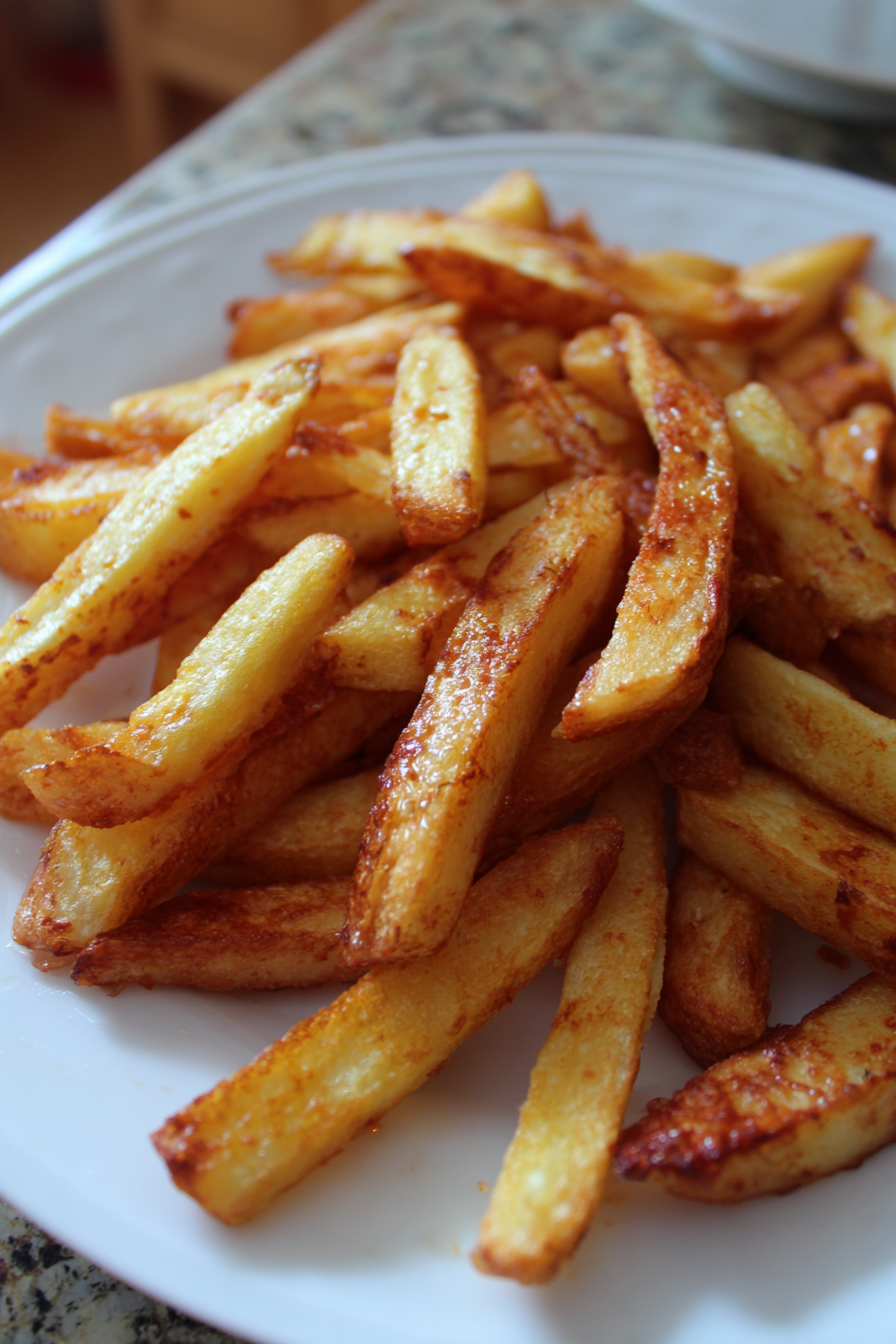
- Working in small batches again, carefully return the blanched and cooled fries to the hotter oil. Fry for another 2-4 minutes, or until they’re beautifully golden brown and super crispy.
- Remove the crispy fries with your slotted spoon, shaking off excess oil, and immediately transfer them back to the wire rack. While they’re still hot, sprinkle generously with Kosher salt.
- Serve immediately with your favorite dipping sauces!
So, about step 1, cutting the fries evenly. This is way more important than I initially thought. I used to just haphazardly chop them, and I’d end up with some super thin, burnt pieces and some thick, undercooked ones in the same batch. That’s no fun. Taking the extra minute to get them uniform means they all cook at the same rate, which equals consistent crispiness. Trust me on this one.
And step 3, drying them? Oh, this is a big one. Like, *huge*. I can’t tell you how many times I thought “good enough” when patting them dry, and then watched the oil violently sputter and spit when I dropped the fries in. Not only is it dangerous, but any lingering water cools the oil down way too fast, which makes your fries absorb more oil and end up greasy instead of crispy. Spend the extra five minutes drying ’em. You won’t regret it.
Another common mistake I made, and you absolutely must avoid, is overcrowding the pot in step 5 and 8. It’s so tempting to just dump all the potatoes in at once to save time, right? Wrong! Every time I’ve done that, the oil temperature drops dramatically, and instead of frying, your potatoes just kinda boil in the oil. They come out soggy, limp, and sad. Fry in small batches, friends, even if it takes a bit longer. It’s the secret to true crispiness.
This Crispy Homemade French Fries Recipe has become such a staple in my house, not just because it’s delicious, but because it feels like an accomplishment every time I get them just right. It’s a fantastic comfort food, perfect for a movie night or as a side to a juicy burger. I actually find the process kinda meditative now, a rhythm of cutting, soaking, frying, and seasoning. It’s definitely not a “one-pot” deal, but the satisfaction is worth the extra cleanup.
I also love that once you get the hang of it, you can totally prep the blanched fries ahead of time. I’ve done that for a few backyard BBQs, which makes serving fresh, hot fries super easy when guests are around. Just do the first fry, cool ’em, and then pop ’em in the fridge until you’re ready for the second fry. Leftovers, if there ever are any, don’t really hold up well for crispiness, but they’re still tasty reheated in a pan. My family devours them before they even get a chance to cool.
The big thing I’d change next time, or rather, that I’m always trying to perfect, is getting the seasoning *just* right. Sometimes I go a little heavy, sometimes a little light. It’s an art, not a science, finding that perfect balance. But even when they’re a little off, they’re still homemade fries, and that’s always a win in my book.
Nutrition Info (per serving)
| Calories | Carbs | Fat | Protein |
|---|---|---|---|
| 380 | 45g | 20g | 5g |
Honestly, the calories in French fries don’t surprise me one bit! It’s deep-fried potatoes, after all. But seeing the breakdown, it’s a good reminder that this is definitely a treat, not an everyday health food. I’ve tried making them lighter by air frying, and while they’re good, they’re just not the same level of crispy indulgence as deep-fried. If you’re looking for a healthier swap, oven-baked or air-fried sweet potato fries can be a delicious alternative that still gives you that fry fix, even if it’s a different vibe. For special diets, obviously, this is gluten-free and vegan, but the fat content is something to keep in mind!
Ingredient Swaps
| Ingredient | Substitution |
|---|---|
| Russet Potatoes | Yukon Gold potatoes, Sweet potatoes |
| Peanut/Canola Oil | Vegetable oil, Sunflower oil (or an air fryer/oven for a different method) |
| Kosher Salt | Flaky sea salt, Seasoned salt, Garlic powder, Paprika |
Let’s talk swaps. I’ve tried Yukon Golds for fries, and while they’re okay, they’re a bit waxier and don’t get quite the same fluffy interior as Russets. They’re still good, just a different texture. Sweet potatoes are a whole different ballgame. They are delicious, but they crisp up differently due to their sugar content, often browning faster. You’ll need to watch them closely and maybe lower your oil temp a little for the second fry. As for oils, any high-smoke-point neutral oil works fine; I’ve used sunflower oil with great success. Trying to use an air fryer or oven isn’t really a “swap” for the oil, but a different cooking method. They can yield decent results, but don’t expect the exact same deep-fried crispiness. It’s more of a crispy baked potato stick, which is still tasty in its own right!
Tips
- **Don’t Rush the Soak:** Seriously, that cold water soak is your secret weapon against soggy fries. The longer, the better (within reason, a few hours is fine). It pulls out surface starch, which is a major enemy of crispiness.
- **The Dryer, The Better:** Any water on the potatoes when they hit the hot oil will cause sputtering, lower the oil temperature, and lead to greasy, limp fries. Pat them vigorously until you think they’re dry, then pat them some more.
- **Double Fry is Non-Negotiable:** This is the magic trick. The first fry cooks them through; the second fry, at a higher temperature, is what blasts them into golden, crispy perfection. Skipping this step is a guarantee for sad fries.
- **Oil Temperature Matters:** Invest in a good thermometer. If your oil isn’t hot enough, the fries absorb too much oil and get greasy. If it’s too hot, they burn on the outside before cooking through. Hitting those temps (300°F then 375°F) is crucial.
- **Small Batches Only:** Overcrowding lowers oil temperature, making fries soggy. Fry in small batches to maintain consistent heat and maximum crispiness.
I wish someone had yelled “OIL TEMPERATURE MATTERS!” at me when I first started. My initial attempts were always a guessing game. “Is it hot enough? Is it too hot?” I’d just eyeball it, and almost every single time, I’d end up with either pale, greasy fries that tasted like they’d been swimming in oil, or sad, burnt little sticks with raw centers. Once I bought a cheap candy thermometer and actually started *using* it, my fry game improved dramatically. It felt like cheating, but it’s not – it’s just smart cooking. That one simple tool saved me so much frustration and so many wasted potatoes. Seriously, don’t guess with the oil temp; get a thermometer.
FAQ
**Q: My fries aren’t getting crispy, what am I doing wrong?**
A: Okay, this is the most common issue, and it usually boils down to a few things. Did you soak them long enough? Did you pat them *really* dry? Did you do the double fry? And was your oil hot enough? My biggest culprit used to be not drying them enough, or trying to rush the double fry by just doing one long fry. Go back through those steps, especially the drying and the two-stage frying process with accurate temperatures, and I bet you’ll see a huge difference.
**Q: Can I use an air fryer or bake them instead of deep frying?**
A: You absolutely can! But here’s the honest truth: they won’t be *exactly* the same as deep-fried. Air frying or baking gives you a healthier, still delicious crispy potato stick, but that intense, golden-brown crunch of a deep-fried fry is hard to replicate without the oil. If you do air fry, make sure to toss them with a little oil before, and cook them in a single layer, flipping often, for the best results.
**Q: What kind of oil is best for frying?**
A: You want a neutral-flavored oil with a high smoke point. My go-to’s are peanut oil or canola oil. Vegetable oil works great too. I’ve tried sunflower and safflower oil with good results as well. The key is that high smoke point, so it doesn’t burn and make your kitchen smell awful or give your fries a weird taste. Don’t use olive oil or butter for deep frying, trust me, I learned that the hard way.
**Q: Can I make these ahead of time?**
A: Yes, partly! This is a great trick for parties. You can do the first fry (the blanching stage) up to a few hours ahead of time. Fry them at 300°F until they’re soft and pale, then take them out, drain them on a wire rack, and let them cool completely. You can even stick them in the fridge. Then, when you’re ready to serve, just heat your oil to 375°F and do the second fry until they’re golden and crispy. It saves a ton of last-minute fuss!
That’s everything I know about making Crispy Homemade French Fries Recipe! Hope you give it a try. And if you mess it up, you’re in good company—I still do it sometimes.
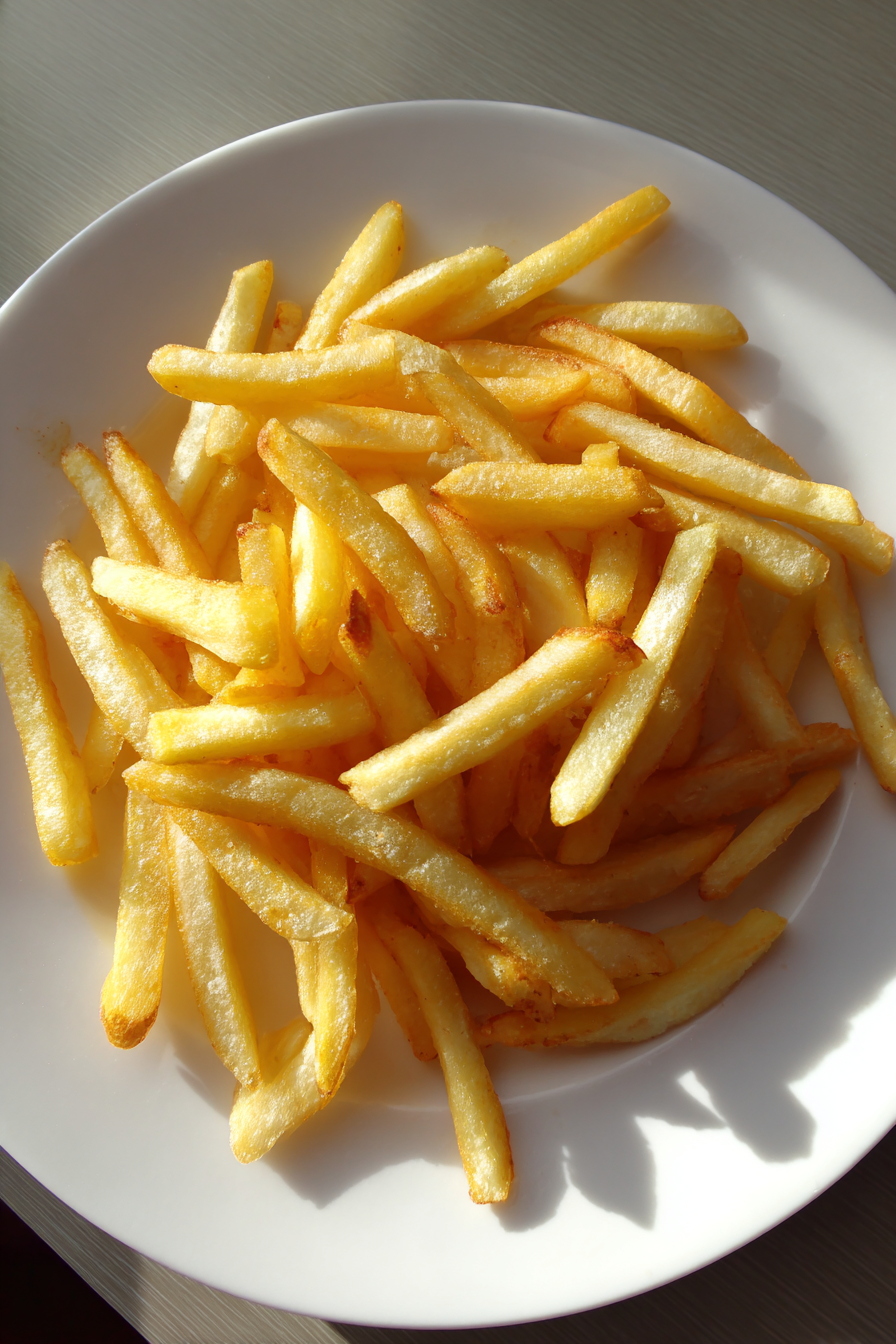
Crispy Homemade French Fries Recipe
Achieve perfectly golden and irresistibly crunchy homemade French fries every time with this meticulously tested recipe. Discover the secrets to a fluffy interior and a perfectly crispy exterior that will make these your new favorite comfort food.
Ingredients
- 2 large Russet potatoes (about 1.5 – 2 pounds)
- 6-8 cups high-smoke-point oil (like peanut, canola, or vegetable oil), for frying
- Plenty of cold water, for soaking
- 1-2 teaspoons Kosher salt, or to taste
Instructions
-
Wash and peel your Russet potatoes. Using a sharp knife or a mandoline (carefully!), cut them into evenly sized sticks, about 1/4 to 1/3 inch thick.
-
Place the cut fries in a large bowl and cover completely with cold water. Let them soak for at least 30 minutes, or even a few hours in the fridge. For super crispy fries, you can even change the water a few times.
-
Once soaked, drain the potatoes well. Spread them out in a single layer on clean kitchen towels or paper towels and pat them *bone dry*. Seriously, get ’em as dry as possible.
-
In a large, heavy-bottomed pot or Dutch oven, pour in your oil. You want enough oil so the fries can float freely, usually about 3-4 inches deep. Heat the oil over medium-high heat until it reaches 300°F (150°C). Use a thermometer.
-
Carefully add a small batch of fries to the hot oil. Don’t overcrowd the pot! Fry them for about 5-7 minutes, until they’re soft, cooked through, and just barely starting to turn pale yellow. This is the first fry, or ‘blanching’ stage.
-
Using a slotted spoon or spider, remove the blanched fries from the oil and transfer them to a wire rack set over a baking sheet. Let them drain and cool completely, at least 15-20 minutes. You can even stick them in the fridge for a bit if you’re patient.
-
Once cooled, increase the oil temperature to 375°F (190°C).
-
Working in small batches again, carefully return the blanched and cooled fries to the hotter oil. Fry for another 2-4 minutes, or until they’re beautifully golden brown and super crispy.
-
Remove the crispy fries with your slotted spoon, shaking off excess oil, and immediately transfer them back to the wire rack. While they’re still hot, sprinkle generously with Kosher salt.
-
Serve immediately with your favorite dipping sauces!
Nutrition (Per Serving)