
Perfect Beef Wellington Recipe
Oh man, Beef Wellington. Just saying the name makes me smile, and also gives me a tiny bit of PTSD from my very first attempt. I was trying to impress my then-boyfriend (now husband, so it worked out!) for our first Christmas dinner together. I’d watched all the fancy chefs on TV make it look so effortless. I bought all the expensive ingredients, felt super confident, and then… disaster. The pastry looked like a deflated pillow, the bottom was soggy beyond belief, and the beef inside was, somehow, both raw in the middle and well-done on the edges. We laughed, ordered pizza, and swore we’d never speak of it again. But something about that challenge just hooked me, and over the years, after many more attempts, some fails, and a lot of learning, I’ve finally gotten to a point where I can confidently make a truly Perfect Beef Wellington Recipe. It’s still a project, but it’s so, so worth it.
Recipe Card
| Recipe Title | Perfect Beef Wellington Recipe |
|---|---|
| Servings | 4 |
| Prep Time | 1 hour 30 minutes (plus 4-6 hours chilling) |
| Cooking Time | 25-35 minutes |
| Calories | About 900-1000 per serving |
Okay, so that prep time might look a little intense, but trust me, a good chunk of that is just waiting for things to chill, which is perfect for doing other stuff around the house or, let’s be real, watching TV. The key with Wellington isn’t speed, it’s patience and letting each step do its job. I learned this the hard way trying to rush the chilling once, and let me tell you, that warm, squishy pastry was *not* a friend to my perfectly seared beef.
Ingredients
- 1.5-2 lb beef tenderloin (center cut)
- 2 tbsp olive oil
- Salt and freshly ground black pepper, to taste
- 1 lb mixed mushrooms (cremini, shiitake), finely chopped
- 2 shallots, finely minced
- 2 cloves garlic, minced
- 2 tbsp unsalted butter
- 1/4 cup dry white wine (like Sauvignon Blanc)
- 1 tbsp fresh thyme leaves, chopped
- 4 oz prosciutto, thinly sliced
- 2 sheets (1.1 lb package) puff pastry, thawed
- 1 large egg, beaten (for egg wash)
- 2 tbsp Dijon mustard
That beef tenderloin is the star, and you really can’t skimp here. I once tried to use a cheaper cut, thinking I could “tenderize” it myself. Nope. It ended up tough, no matter how perfectly I cooked the outside. Stick with tenderloin; it’s worth the splurge for this dish.
Olive oil, salt, and pepper seem basic, right? But searing is so crucial. My first time, I didn’t season the beef enough, and it just tasted… flat. Don’t be shy with the salt and pepper on the tenderloin before searing.
The mushrooms are for your duxelles, which is basically mushroom paste, and it’s super important for flavor and creating a moisture barrier. I once made the mistake of not chopping them *finely enough*. It was more like chunky mushroom salsa, and it didn’t spread well at all. Learn from my lumpy mistakes!
Shallots and garlic really bring out the savory notes in the duxelles. Don’t skip these, they add so much depth. I forgot the shallots once, and the duxelles was just… missing something. It was bland, even with all those mushrooms.
Unsalted butter for the duxelles is best. It lets you control the saltiness later. I almost grabbed salted butter once, and then remembered my last batch was a little too salty. Dodged a bullet there!
Dry white wine deglazes the pan and adds an incredible layer of flavor to the duxelles. Please, don’t use cooking wine from the grocery store. Use something you’d actually drink! I tried “cooking sherry” once, and it tasted like… well, like cooking sherry. Not good.
Fresh thyme is non-negotiable for me. The aroma and flavor are just perfect with beef and mushrooms. Dried thyme is okay in a pinch, but fresh really elevates it. I learned this when I was out of fresh and tried dried, and it just wasn’t the same zing.
Prosciutto. Oh, glorious prosciutto. This isn’t just for flavor, it’s another moisture barrier layer. Don’t get the super thick-cut stuff; you want thin slices that will lay flat and create a nice seal. I once had some prosciutto that was too thick, and it just created weird pockets when I wrapped it. Not ideal.
Puff pastry is where many Wellingtons meet their fate. I use store-bought, good quality puff pastry. Don’t try to make your own unless you’re a pastry chef; it’s just not worth the stress for this dish. And make sure it’s fully thawed but still cold, otherwise it’s just sticky sadness. I once tried to rush thawing it in the microwave, and it became a gooey mess I couldn’t even unroll.
One large egg, beaten, for the egg wash. This is what gives your Wellington that gorgeous golden-brown, crispy crust. Don’t forget it, or it’ll come out looking pale and sad. I definitely forgot to do this once, and the pastry was barely golden.
Dijon mustard adds a little tang and helps the prosciutto stick to the beef. It’s a small step that makes a big difference in flavor and structure. I almost skipped this once, thinking it wouldn’t matter much, but it really balances the richness of the beef and mushrooms.
Directions
- Pat the beef tenderloin very dry with paper towels. Season generously with salt and pepper all over.
- Heat olive oil in a large, oven-safe skillet over high heat until shimmering. Sear the beef on all sides until deeply browned, about 2-3 minutes per side. Remove from skillet and let cool slightly.
- Spread a thin layer of Dijon mustard over the cooled beef.
- In the same skillet (or a new one if it’s super gunked up), add butter over medium heat. Add chopped mushrooms and cook, stirring frequently, until they release their liquid and it completely evaporates, about 10-15 minutes.
- Add shallots and garlic to the mushrooms and cook for another 3-5 minutes until softened.
- Pour in white wine, scraping up any browned bits from the bottom of the pan. Cook until the wine has completely evaporated. Stir in fresh thyme.
- Remove the duxelles from the heat and spread it onto a plate to cool completely. This is crucial!
- Lay out a large piece of plastic wrap on a clean surface. Arrange the prosciutto slices, slightly overlapping, into a rectangle large enough to wrap the beef.
- Spread the cooled duxelles evenly over the prosciutto.
- Place the mustard-coated beef tenderloin at one end of the prosciutto-duxelles rectangle.
- Using the plastic wrap, tightly roll the prosciutto and duxelles around the beef, creating a neat, compact cylinder. Twist the ends of the plastic wrap to secure it tightly. Refrigerate for at least 30 minutes (or up to a few hours) to firm up.
- Preheat your oven to 400°F (200°C). Line a baking sheet with parchment paper.
- On a lightly floured surface, unroll one sheet of puff pastry. If using two sheets, overlap them slightly and press the seam to seal. Roll it out into a rectangle large enough to fully encase the beef, about 1/8-inch thick.
- Remove the beef from the plastic wrap. Place it in the center of the puff pastry.
- Fold the pastry up and over the beef, trimming any excess. Seal the seams tightly by pressing firmly or crimping with a fork. Turn the Wellington seam-side down on the prepared baking sheet.
- If desired, use pastry scraps to cut out decorations (leaves, lattice) and attach them to the top with a little egg wash.
- Brush the entire surface of the pastry with the beaten egg wash. You can score the top lightly with a knife for decoration, being careful not to cut through the pastry.
- Bake for 25-35 minutes, or until the pastry is golden brown and the internal temperature of the beef reaches 125-130°F (52-54°C) for medium-rare. Use a meat thermometer!
- Remove from oven and let rest for at least 10-15 minutes before slicing and serving. This resting time is non-negotiable!
Okay, let’s talk about Step 2: searing the beef. I once didn’t get my skillet hot enough, and the beef just kinda steamed instead of getting that beautiful, crusty sear. That crust isn’t just for looks; it locks in juices. Make sure your pan is smoking hot, and don’t overcrowd it. If you have two smaller tenderloins, sear them one at a time. It makes a difference.
Step 7, cooling the duxelles, is *super* important. I was once impatient and put warm duxelles on the prosciutto. What happened? The prosciutto started to cook and get weirdly greasy, and the whole thing was just too warm to roll tightly. It ended up with a sloppy wrap, and you really want a tight, compact roll here. Cool it down, friend, cool it down.
Step 11, wrapping the beef with plastic wrap and chilling it. This step is a game-changer for me. My first few tries, I skipped this or only chilled it for a few minutes. The result was a loose, wobbly beef log that was impossible to wrap nicely in pastry. Taking the time to chill it completely firm makes it so much easier to handle and ensures a tight, even wrap with the pastry. Don’t skip this, seriously!
For Step 15, sealing the seams, please be thorough. I’ve had Wellingtons burst open in the oven because I thought a light crimp was enough. Nope! Press those seams firmly together, or use a fork to really crimp them shut. Any open seam is an invitation for delicious beef juices to leak out and make your pastry soggy. And nobody wants a soggy bottom.
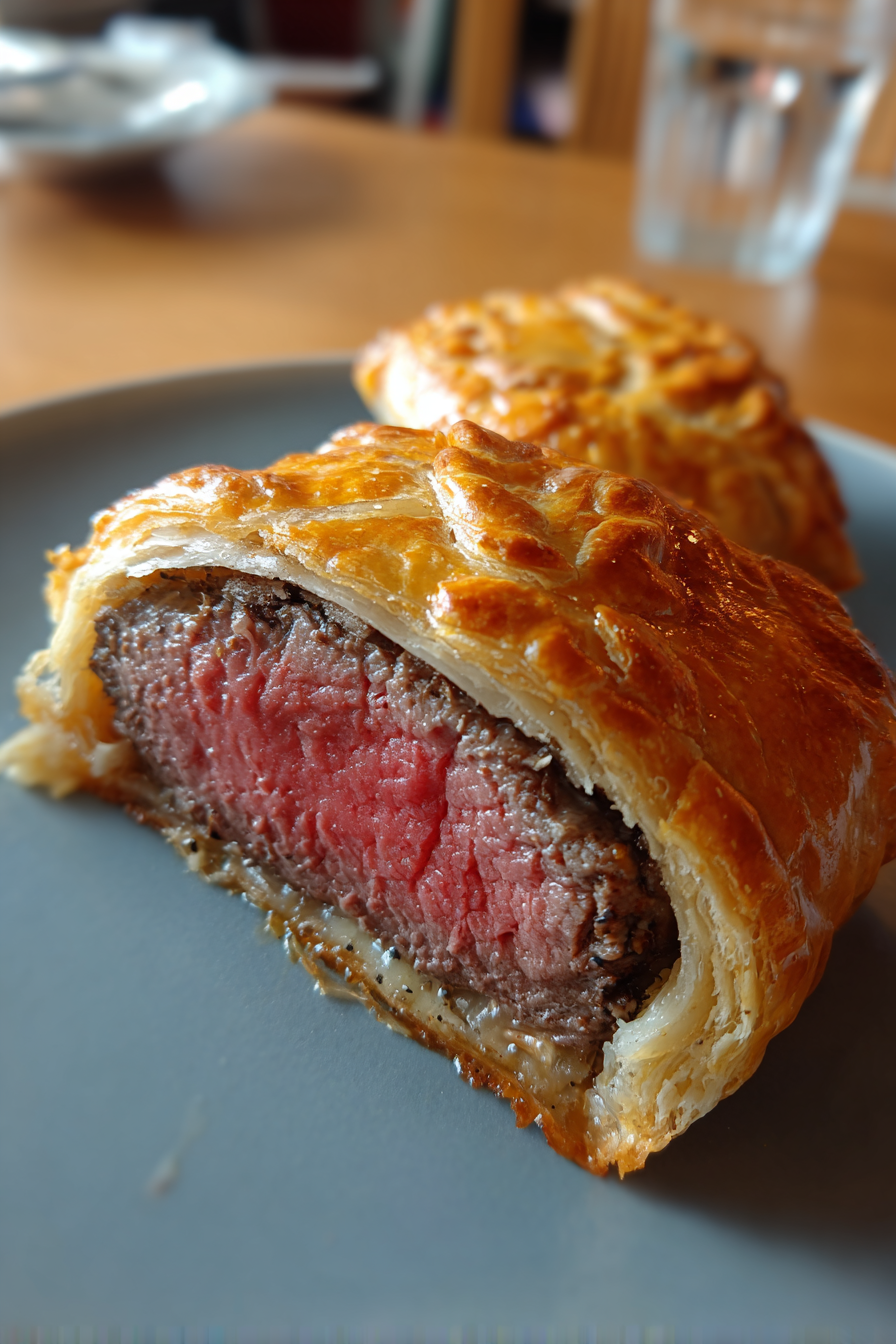
Making the Perfect Beef Wellington Recipe has been a journey, that’s for sure. It’s not the kind of “easy dinner” you whip up on a Tuesday night. This is a special occasion dish, a labor of love. I remember finally nailing it for my in-laws’ anniversary dinner, and the look on their faces when I sliced into it and revealed that perfect medium-rare pink center and golden, flaky crust was just priceless. All those earlier mishaps, the soggy bottoms, the overcooked beef, the burst pastry, they all felt worth it in that moment.
It’s become a bit of a family tradition for holidays now, and even though it takes time, I actually enjoy the process. There’s something so satisfying about the precision, about building those layers, and seeing it come out of the oven looking like a million bucks. And honestly, the “leftovers,” if there are any, are actually pretty great too. I mean, it’s not a healthy swap kind of meal, it’s comfort food at its absolute finest, and sometimes, you just need that. My husband always jokes that it’s the only time I cook something that fancy, but hey, it’s a showstopper!
The biggest thing I’d change or emphasize for anyone starting out is to embrace the chilling times. Seriously, don’t rush it. I used to think I could shave off time, but all I did was create more problems for myself down the line. A cold, firm beef log and cold, pliable pastry are your best friends here. And get a good meat thermometer; it takes all the guesswork out of hitting that perfect doneness. It’s a bit of an investment, but it’ll save you from so much heartache.
Nutrition Info (per serving)
| Calories | Carbs | Fat | Protein |
|---|---|---|---|
| 950 | 35g | 65g | 55g |
Wow, yeah, the nutrition numbers aren’t exactly diet-friendly, are they? But honestly, is anyone making Beef Wellington to be healthy? It’s a celebratory meal! I haven’t really tried to make it “lighter” because I feel like you’d lose some of the magic. Maybe using less butter in the duxelles or opting for a leaner cut of beef if you absolutely must, but really, for special diets, this might be one to enjoy in moderation or on a cheat day. It’s not gluten-free or dairy-free, that’s for sure!
Ingredient Swaps
| Ingredient | Substitution |
|---|---|
| Beef Tenderloin | Pork Tenderloin (different flavor, but can work) |
| Prosciutto | Thinly sliced speck or even crepes (for a dairy-free barrier) |
| White Wine | Beef broth (for alcohol-free) |
| Puff Pastry | Phyllo dough (much lighter, but tricky to wrap) |
Okay, so some of these swaps actually work, and some… well, they change the dish quite a bit. Pork tenderloin can work if you’re on a budget, but the flavor is definitely different and not as rich as beef. It can also dry out quicker, so watch your cooking time. Using speck instead of prosciutto is totally fine; it’s a similar cured meat. I tried crepes once instead of prosciutto for a friend who didn’t eat pork, and it provided a decent moisture barrier, but didn’t add the same salty, savory depth that prosciutto does. Beef broth for wine is an easy one if you don’t want alcohol; it still deglazes and adds flavor, just slightly different. But phyllo dough? That was an adventure. It gets super crispy, almost shatter-like, but it’s really hard to get a tight seal, and it browns *much* faster than puff pastry, so you have to adjust oven temps and times like crazy. I ended up with a slightly burnt, fragmented shell that time. Stick with puff pastry for the real deal!
Tips
- **Dry, Dry, Dry the Beef:** Pat that tenderloin like you’re trying to win an Olympic drying competition before searing. Any moisture means less sear and more steam, leading to a dull crust.
- **Don’t Rush the Duxelles:** Cook it until it’s super dry and practically a paste. This concentrates the mushroom flavor and, more importantly, prevents a soggy bottom.
- **Chill, Chill, Chill:** Refrigerate the beef log *and* the wrapped Wellington. Cold ingredients are easier to work with, prevent pastry from getting soft, and help the Wellington hold its shape beautifully.
- **Invest in a Meat Thermometer:** This is the only way to guarantee perfectly cooked beef inside your pastry. Trust me, guesswork leads to disappointment.
My biggest lesson, the one I wish I knew earlier, is captured in those three “Chill, Chill, Chill” bullet points. I cannot stress this enough! My very first Wellington, I didn’t chill the beef log at all after wrapping it in prosciutto and duxelles. I just went straight to the pastry. It was warm, floppy, and slippery, and when I tried to wrap the pastry around it, the whole thing just squished and became lopsided. The pastry ripped, and it was just a mess. The second time, I put it in the freezer for 15 minutes instead of the fridge for 30, thinking “same difference!” Nope. It got too cold on the outside, and the inside was still wobbly. Now, I always give it at least 30 minutes in the fridge for the beef log and then another 30-60 minutes once it’s fully wrapped in pastry. It makes *all* the difference in getting that neat, beautiful package you see in magazines.
FAQ
Q: My puff pastry always cracks or tears when I roll it out. What am I doing wrong?
A: Oh, I’ve been there! Usually, this happens for two reasons: either your pastry isn’t thawed enough (so it’s brittle) or it’s too warm (so it’s sticky and weak). Make sure it’s thawed in the fridge overnight, then let it sit on the counter for just 10-15 minutes before rolling. You want it pliable but still very cold. A lightly floured surface helps, but don’t over-flour, or it can dry it out. And roll gently, with even pressure!
Q: How do I avoid a soggy bottom? That’s my biggest fear!
A: Soggy bottom is the nemesis of all Wellington makers! The absolute key is your duxelles. You MUST cook out all the moisture from the mushrooms. I mean ALL of it. It should be a dry paste, not a wet spread. Also, the prosciutto layer helps create a barrier. And finally, make sure your oven is properly preheated to 400°F. A hot oven creates steam that lifts the pastry quickly. If your oven isn’t hot enough, the bottom sits on the pan too long and can get wet. I learned this when I undercooked my duxelles once and ended up with a sad, damp base. Never again!
Q: My beef always comes out overcooked even if the pastry is golden. What’s the secret?
A: This is where that meat thermometer is your best friend! Seriously, don’t guess. Pull the Wellington out when the internal temperature of the beef is 125-130°F (52-54°C) for medium-rare. It will continue to cook as it rests (this is called carryover cooking), so if you wait until it hits your target temp, it’ll be overcooked by the time you slice it. Also, make sure your beef isn’t super thick or uneven. A consistent thickness helps it cook evenly. I definitely used to overcook it all the time until I started pulling it out earlier and resting it longer.
Q: Can I make Beef Wellington ahead of time?
A: You totally can! I often assemble the entire Wellington (up to the egg wash stage) a day ahead of time. Just make sure everything is super cold before wrapping, wrap it tightly in plastic wrap, and store it in the fridge. On baking day, unwrap, egg wash, and bake as usual. It’s a lifesaver for holiday dinners when you want to minimize stress on the big day. I actually prefer making it ahead because it gives everything more time to chill and firm up, which leads to a more stable bake.
That’s everything I know about making Perfect Beef Wellington Recipe! Hope you give it a try. And if you mess it up, you’re in good company—I still do it sometimes.
Perfect Beef Wellington Recipe
Master this iconic Beef Wellington recipe, perfected over years, to achieve a show-stopping dish with a golden, flaky pastry and a tender, medium-rare beef tenderloin. Impress your guests with this challenging yet incredibly rewarding culinary masterpiece.
Ingredients
- 1.5-2 lb beef tenderloin (center cut)
- 2 tbsp olive oil
- Salt and freshly ground black pepper, to taste
- 1 lb mixed mushrooms (cremini, shiitake), finely chopped
- 2 shallots, finely minced
- 2 cloves garlic, minced
- 2 tbsp unsalted butter
- 1/4 cup dry white wine (like Sauvignon Blanc)
- 1 tbsp fresh thyme leaves, chopped
- 4 oz prosciutto, thinly sliced
- 2 sheets (1.1 lb package) puff pastry, thawed
- 1 large egg, beaten (for egg wash)
- 2 tbsp Dijon mustard
Instructions
-
Pat the beef tenderloin very dry with paper towels. Season generously with salt and pepper all over.
-
Heat olive oil in a large, oven-safe skillet over high heat until shimmering. Sear the beef on all sides until deeply browned, about 2-3 minutes per side. Remove from skillet and let cool slightly.
-
Spread a thin layer of Dijon mustard over the cooled beef.
-
In the same skillet, add butter over medium heat. Add chopped mushrooms and cook, stirring frequently, until they release their liquid and it completely evaporates, about 10-15 minutes.
-
Add shallots and garlic to the mushrooms and cook for another 3-5 minutes until softened.
-
Pour in white wine, scraping up any browned bits from the bottom of the pan. Cook until the wine has completely evaporated. Stir in fresh thyme.
-
Remove the duxelles from the heat and spread it onto a plate to cool completely.
-
Lay out a large piece of plastic wrap on a clean surface. Arrange the prosciutto slices, slightly overlapping, into a rectangle large enough to wrap the beef.
-
Spread the cooled duxelles evenly over the prosciutto.
-
Place the mustard-coated beef tenderloin at one end of the prosciutto-duxelles rectangle.
-
Using the plastic wrap, tightly roll the prosciutto and duxelles around the beef, creating a neat, compact cylinder. Twist the ends of the plastic wrap to secure it tightly. Refrigerate for at least 30 minutes (or up to a few hours) to firm up.
-
Preheat your oven to 400°F (200°C). Line a baking sheet with parchment paper.
-
On a lightly floured surface, unroll one sheet of puff pastry. If using two sheets, overlap them slightly and press the seam to seal. Roll it out into a rectangle large enough to fully encase the beef, about 1/8-inch thick.
-
Remove the beef from the plastic wrap. Place it in the center of the puff pastry.
-
Fold the pastry up and over the beef, trimming any excess. Seal the seams tightly by pressing firmly or crimping with a fork. Turn the Wellington seam-side down on the prepared baking sheet.
-
If desired, use pastry scraps to cut out decorations (leaves, lattice) and attach them to the top with a little egg wash.
-
Brush the entire surface of the pastry with the beaten egg wash. You can score the top lightly with a knife for decoration, being careful not to cut through the pastry.
-
Bake for 25-35 minutes, or until the pastry is golden brown and the internal temperature of the beef reaches 125-130°F (52-54°C) for medium-rare. Use a meat thermometer!
-
Remove from oven and let rest for at least 10-15 minutes before slicing and serving. This resting time is non-negotiable!
Nutrition (Per Serving)