Perfect Beef Wellington Recipe
Oh man, Beef Wellington. Just saying the name makes me remember my very first attempt years ago. It was for our wedding anniversary, and I wanted to do something super fancy, you know? I’d seen it on TV and thought, “How hard can it be?” Spoiler alert: pretty hard for a newbie. I remember pulling it out of the oven, all proud, only for a giant crack to appear right down the middle, like the Grand Canyon of pastry, and a suspicious amount of liquid bubbling out. My husband, bless his heart, said it looked “rustic.”
The inside was a mixed bag too. One end was perfect medium-rare, the other was… well, let’s just say it had seen better days, closer to well-done. It wasn’t the “Perfect Beef Wellington Recipe” I’d envisioned, not by a long shot. But you know what? We still laughed about it, ate it anyway, and it tasted surprisingly good despite its ugly appearance. And that’s the magic of this dish – even when you mess it up, it’s still pretty darn delicious, and it teaches you so much. After a lot of trial and error (and a few more “rustic” attempts), I’ve finally nailed down my perfect method, and I’m so excited to share all my hard-earned lessons with you.
Recipe Card
| Recipe Title | Perfect Beef Wellington Recipe |
|---|---|
| Servings | 4–6 people |
| Prep Time | 45 minutes (plus 2 hours chilling) |
| Cooking Time | 35–45 minutes |
| Calories | Approx. 750-900 per serving (see notes below) |
Ingredients
- 1.5–2 lb beef tenderloin (the center-cut is best)
- 2 tbsp olive oil
- 1 tbsp unsalted butter
- 1 tsp salt, plus more for seasoning
- 1/2 tsp black pepper, plus more for seasoning
- 2 tbsp Dijon mustard
- 1 lb mixed mushrooms (cremini, button, shiitake), finely chopped
- 1 small shallot, finely minced
- 2 cloves garlic, minced
- 1/4 cup dry white wine (like Sauvignon Blanc or Pinot Grigio)
- 10–12 slices prosciutto
- 1 sheet (17.3 oz) good quality puff pastry, thawed in the fridge
- 1 large egg, beaten (for egg wash)
Okay, let’s talk ingredients. The beef tenderloin is obviously the star here. Don’t skimp on quality! I once tried to use a cheaper cut, thinking “it’s wrapped in pastry, who will know?” Everyone knew. It was tough and stringy, a total waste of effort. Get a good center-cut, it makes all the difference in tenderness.
For the mushrooms, don’t be afraid to mix it up. Cremini are great, but adding some shiitake or oyster mushrooms really deepens the flavor of your duxelles. The first time I made this, I only had button mushrooms, and I didn’t chop them finely enough. My duxelles ended up chunky and wet, which is the enemy of crispy pastry.
The prosciutto is non-negotiable for me. I once skipped it, thinking it was just extra salt, but it’s so much more. It creates a protective layer that keeps the beef juices from making the pastry soggy. It’s a magic shield! Plus, that salty, savory flavor with the beef? Unbeatable.
And puff pastry! This is where I’ve learned the most hard lessons. Don’t cheap out. Seriously. A good quality all-butter puff pastry from the store makes such a difference in flakiness and flavor. I once bought a super cheap brand, and it just broke and tore every time I tried to roll it. It was like trying to wrap a present with wet tissue paper.
Directions
- Pat the beef tenderloin very dry with paper towels. Season generously all over with 1 tsp salt and 1/2 tsp black pepper.
- Heat olive oil and butter in a large, heavy-bottomed skillet over high heat until shimmering and almost smoking. Sear the beef tenderloin on all sides until deeply browned, about 2-3 minutes per side.
- Remove the beef from the skillet and immediately brush all over with Dijon mustard. Let it cool completely on a wire rack, then chill in the fridge for at least 30 minutes.
- While the beef chills, make the duxelles: In the same skillet (don’t clean it!), add the finely chopped mushrooms. Cook over medium-high heat, stirring occasionally, for 8-10 minutes until most of the moisture has evaporated.
- Add the shallot and garlic to the mushrooms and cook for another 3-5 minutes until softened.
- Pour in the white wine and cook until completely evaporated, scraping up any browned bits from the bottom of the pan. Continue to cook until the duxelles is very dry – this is crucial! Season with salt and pepper to taste. Remove from heat and let cool completely.
- Lay out a large piece of plastic wrap on your counter. Arrange the prosciutto slices, overlapping them slightly, into a rectangle large enough to completely cover the tenderloin.
- Spread the cooled duxelles evenly over the prosciutto.
- Place the chilled, mustard-brushed beef tenderloin at one end of the prosciutto and duxelles. Using the plastic wrap, carefully roll the prosciutto and duxelles tightly around the beef. Twist the ends of the plastic wrap to form a tight log and chill in the fridge for at least 1 hour (or up to 2 hours for best results).
- Preheat your oven to 400°F (200°C).
- Lightly flour a clean surface. Carefully unroll the puff pastry sheet. If needed, gently roll it out a bit to make it larger, ensuring it’s big enough to fully enclose the beef.
- Unwrap the chilled beef log from the plastic wrap and place it in the center of the puff pastry.
- Bring one side of the pastry over the beef, then the other, overlapping slightly. Trim any excess pastry, leaving about a 1-inch overlap. Press the seam firmly to seal.
- Fold the ends of the pastry up and over, trimming excess if necessary, then press firmly to seal, creating a neat package. You can use any pastry scraps to cut out decorative shapes and attach them with egg wash, if you’re feeling fancy!
- Place the Wellington, seam-side down, on a baking sheet lined with parchment paper.
- Brush the entire surface of the pastry with the beaten egg wash.
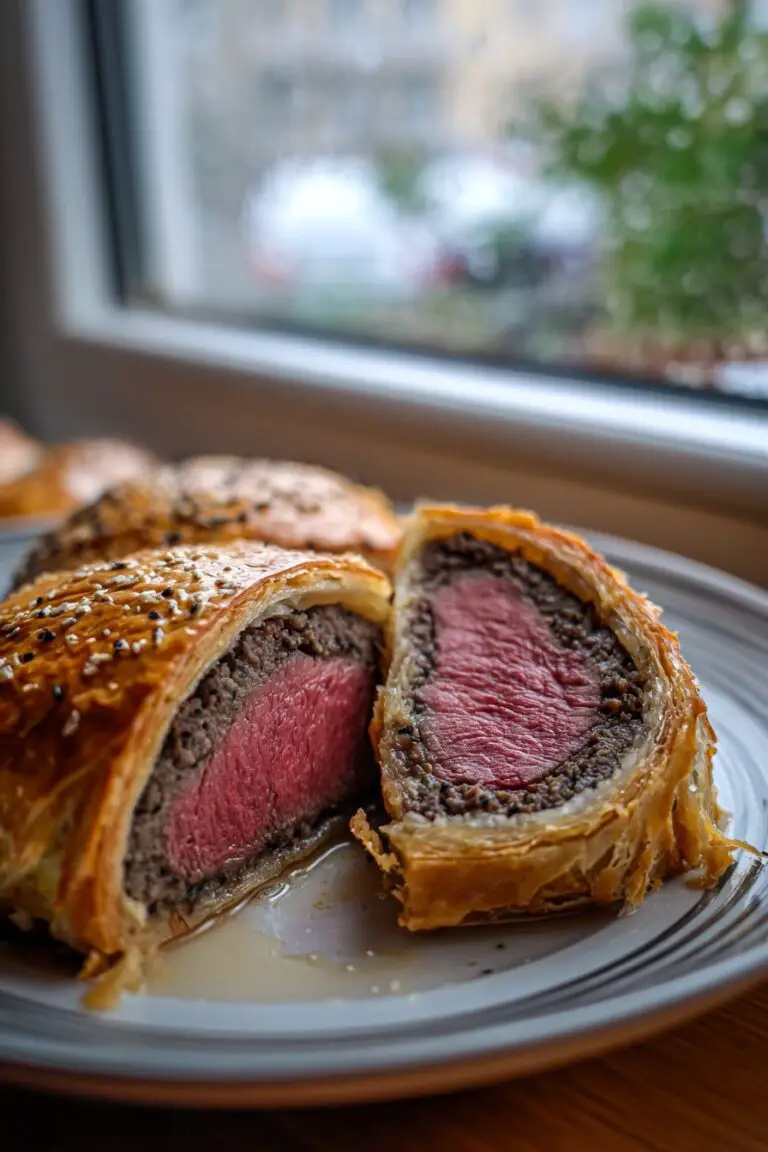
- Bake for 35-45 minutes, or until the pastry is golden brown and a meat thermometer inserted into the thickest part of the beef reads 125-130°F (52-54°C) for medium-rare.
- Remove from the oven and let it rest for at least 10-15 minutes before slicing and serving. This resting time is super important!
Okay, let’s talk about searing the beef in step 2. This is HUGE. You want a really, really hot pan to get that beautiful crust. I’ve made the mistake of not heating my pan enough, and instead of searing, the beef just kind of steamed and turned gray. It was sad. Get that pan smoking hot, it makes a world of difference for flavor and texture. And don’t forget to pat the beef *super* dry first – moisture is the enemy of a good sear.
The duxelles in steps 4-6 is another major potential pitfall. “Cook until very dry” is not just a suggestion, it’s a command! One time, I got impatient and left too much moisture in the mushrooms. When the Wellington baked, that trapped moisture turned to steam, making the bottom of my pastry completely soggy and impossible to lift. It was like a delicious, meaty swamp. So, really cook those mushrooms down until they’re almost paste-like and no liquid remains. Trust me on this one.
Wrapping the beef in the prosciutto and duxelles (step 9) and then in the pastry (steps 13-14) is where the real stress used to kick in for me. My first few times, I tried to roll the pastry too tightly or too loosely. Too tight, and it would burst in the oven (hello, Grand Canyon!). Too loose, and it would slide off, leaving gaps. The trick is to be firm but gentle. Use the plastic wrap to help you get a really snug log in step 9, then just take your time with the puff pastry. Don’t rush it, and don’t be afraid to patch up small tears with a little water or egg wash.
After all that, you finally get to pull it out of the oven, golden and fragrant. It’s truly a showstopper, even if it took me years to get it right. What I love most about Perfect Beef Wellington Recipe is how it feels so incredibly special, like comfort food elevated to an art form. It’s definitely a family favorite for celebrations, and the leftovers (if there are any, which is rare!) are fantastic cold in sandwiches the next day, though it’s hardly an “easy dinner” or “one-pot” kind of meal. The biggest mistake I still make sometimes is not letting it rest long enough after baking – impatience can ruin all that hard work by letting the juices run out when you slice it. I’d really like to try making a smaller, individual Wellington next time, just to see if it’s easier to manage the cooking evenly.
Nutrition Info (per serving)
| Calories | Carbs | Fat | Protein |
|---|---|---|---|
| 850 | 35g | 60g | 45g |
Yeah, looking at those numbers, it definitely confirms Beef Wellington isn’t a health food! It’s rich, decadent, and meant for special occasions, not an everyday healthy swap. I haven’t really tried to make it lighter because, honestly, part of its charm is its indulgence. If you’re watching your diet, maybe consider smaller portions or just enjoy it as a treat. I wouldn’t recommend this for a low-fat or low-carb diet without some serious modifications that would probably change the whole essence of the dish.
Ingredient Swaps
| Ingredient | Substitution |
|---|---|
| Prosciutto | Thinly sliced crepes or parma ham |
| Dry White Wine | Chicken or beef broth (for duxelles) |
| Dijon Mustard | Wholegrain mustard |
| Puff Pastry | Homemade rough puff pastry (if you’re feeling ambitious!) |
Now, about these ingredient swaps… some work, some really don’t. Using chicken or beef broth instead of wine in the duxelles works okay; you lose a little acidity and complexity, but it’s still good. Wholegrain mustard for Dijon is a great swap, actually, it adds a lovely texture and a slightly milder flavor that some people prefer. I’ve heard of people trying to use crepes instead of prosciutto, and while it creates a barrier, it doesn’t add that essential salty, savory punch that prosciutto does. So I wouldn’t really recommend that one unless you absolutely have to. And making your own puff pastry? Hats off to you if you do it, but I’m a home cook, not a pastry chef, so store-bought good quality puff pastry is my ride-or-die.
Tips
- **Dry, Dry, Dry:** Make sure your beef is super dry before searing, and your duxelles is cooked down until it’s almost paste-like. This is the secret to crispy pastry!
- **Chill Out:** Don’t rush the chilling steps. A well-chilled beef log (with prosciutto and duxelles) and later, a well-chilled wrapped Wellington, will hold its shape better and bake more evenly.
- **Thermometer is Your Best Friend:** Invest in a good meat thermometer. Guessing internal temperature is a recipe for disaster with a dish this expensive. Aim for 125-130°F for medium-rare before resting.
- **Rest, Rest, Rest:** Let the Wellington rest for at least 10-15 minutes after baking. This allows the juices to redistribute, ensuring a tender, juicy cut every time.
These tips? Oh man, I wish someone had screamed them at me the first time I made this! The “dry, dry, dry” thing is honestly the biggest lesson I learned the hard way. I once got so excited to wrap my Wellington that I barely cooked down the mushrooms and just slapped the pastry on. When it came out, the bottom was a soggy, pale, unappetizing mess. All that beautiful golden top, and then just wet dough underneath. It was such a bummer after all that effort. Now, I cook the duxelles until I can practically feel the pan scraping clean when I stir it. It takes longer, but it’s worth every extra minute. And the meat thermometer? I undercooked one so badly once, I had to put it back in the oven after slicing, which completely ruined the pastry. Never again!
FAQ
Q: My puff pastry always tears when I try to wrap the beef. What am I doing wrong?
A: Been there, done that! There are a few culprits here. First, make sure your puff pastry isn’t too cold (it’ll crack) or too warm (it’ll get sticky and tear easily). Take it out of the fridge about 15-20 minutes before you use it. Also, make sure your beef log is really tight and smooth – any bumps can catch and tear the pastry. Be gentle, and if a small tear happens, just press it together with a little water or egg wash. It’s not the end of the world!
Q: How do I know when the Beef Wellington is perfectly cooked to medium-rare? I’m scared to overcook it!
A: I totally get that fear! Overcooking a Wellington is a common mistake and a tragedy for that beautiful tenderloin. The best way, hands down, is a good instant-read meat thermometer. Insert it horizontally into the thickest part of the beef *through the pastry* (don’t worry, the hole will mostly seal). For medium-rare, you’re looking for 125-130°F (52-54°C). Remember, it’ll cook a few more degrees as it rests, so pull it out just before it hits your target temp.
Q: Can I make Beef Wellington ahead of time?
A: Yes, you absolutely can, and it’s a game-changer for entertaining! You can assemble the entire Wellington (up to step 16, before egg washing and baking) and store it tightly wrapped in plastic wrap in the fridge for up to 24 hours. Just make sure it’s really well chilled before baking. This makes it so much less stressful on the day you want to serve it. I’ve done this for Christmas dinner many times, and it works great.
That’s everything I know about making Perfect Beef Wellington Recipe! Hope you give it a try. And if you mess it up, you’re in good company—I still do it sometimes.